
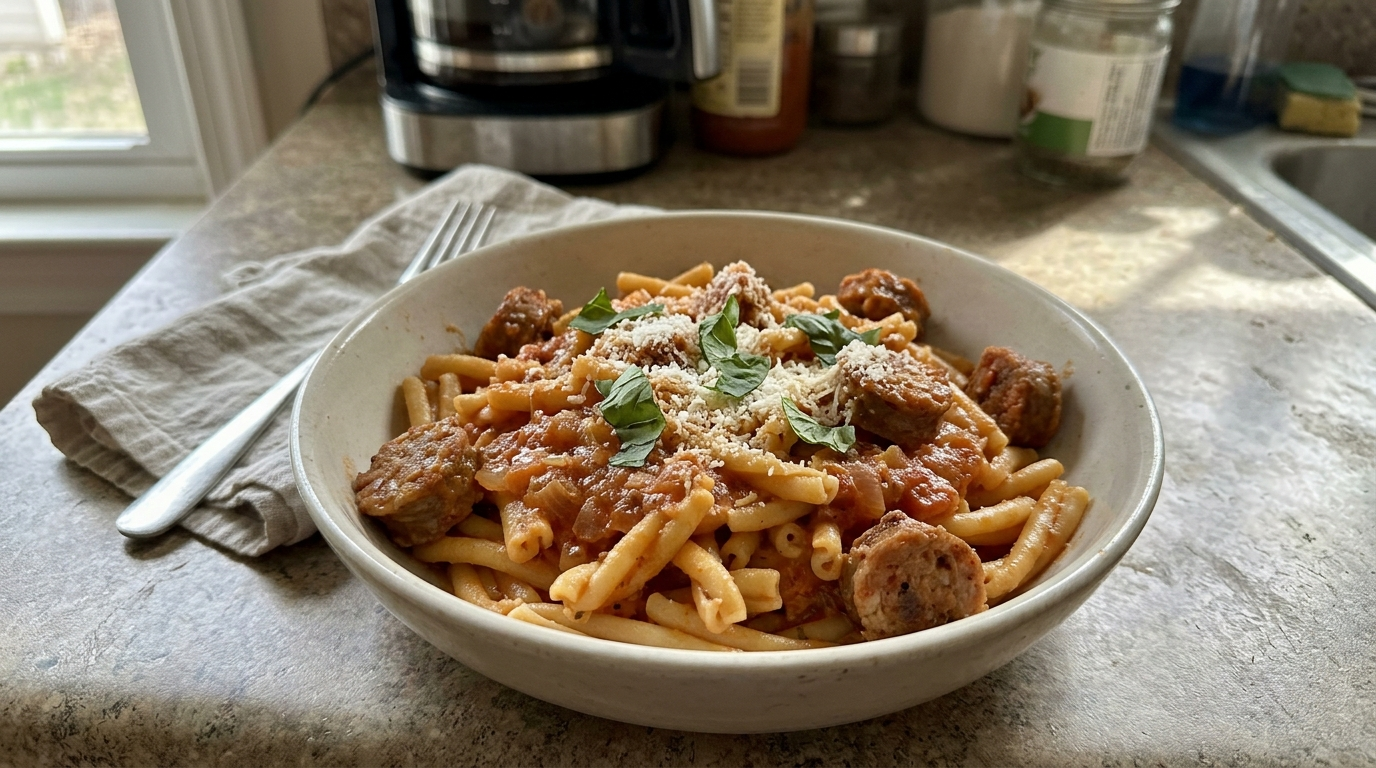
This casarecce pasta with sausage is one of those recipes that makes a simple sauce feel a little more special. Casarecce itself is short, slightly twisted, and has a curled shape that catches bits of sausage and tomato sauce in all the right places. I especially like it with a thick tomato sauce because there are plenty of little edges for the sauce to cling to.
This version has browned sausage, onion, garlic, crushed tomatoes, tomato paste, rosemary, thyme, oregano, Parmesan, and just enough cream to soften the tomato sauce. The flavors build in the same pot after the pasta is cooked, so cleanup stays fairly simple.
There’s one step I pay close attention to: the pasta. Casarecce can go from pleasantly firm to soft rather quickly, especially once it gets folded into hot sauce. I cook it just until al dente, save some of the starchy cooking water, and let the sauce do the rest of the work.
The result is a hearty pasta dinner with a rich sauce, browned sausage in every few bites, and a creamy finish without turning the dish into a heavy cream sauce.
Why Casarecce Pasta Works So Well with Sausage
Casarecce pasta isn’t smooth like spaghetti. Its folded shape gives the sauce more places to settle. The little groove through the center also catches tiny pieces of sausage, herbs, and Parmesan.
I find that this matters more than people expect. A thinner pasta can let a chunky tomato-and-sausage sauce slide off. Casarecce holds onto it, so each forkful has a little more of everything — the same reasoning behind picking a ridged shape for Creamy Orzo Pasta Without Cream, where the sauce needs something to grip onto without extra fat.
You also don’t need to drown the pasta in sauce. The goal is a thick coating that sits around the curls, so I keep some pasta water nearby instead of adding extra tomatoes or cream when the sauce looks too thick.
How to Keep This Casarecce Pasta Sauce Thick but Creamy
The crushed tomatoes and tomato paste give this sauce its body. Simmering uncovered matters because excess liquid needs somewhere to escape. When the sauce starts out loose, don’t add more tomato paste right away — give it time to reduce first.
I also add the Parmesan and cream after the sauce has thickened. Parmesan brings salt and savory flavor, while the small amount of cream rounds out the sharpness of the tomatoes. Pasta water can then loosen the finished sauce without making it watery.
I wouldn’t rush this part of the recipe. Let the sauce simmer until it looks thick enough to coat the back of a spoon. It should still move easily when stirred, but it shouldn’t look like tomato soup.
Casarecce Pasta Ingredients
- 1 lb casarecce pasta: The curled shape holds onto the chunky sausage and tomato sauce.
- 4 sausage links, sliced: Italian sausage brings the main savory flavor. Sweet or hot sausage both work.
- 1 small onion, diced: It softens into the sauce and adds a mild sweetness as it cooks.
- 4 garlic cloves, diced: Four cloves give the tomato sauce a clear garlic flavor without overpowering the herbs.
- 3 sprigs fresh thyme: Strip the leaves from the stems if you prefer a smoother sauce.
- 1 tbsp fresh basil, chopped: Fresh basil adds a softer, greener note. Save extra for the top.
- 2 sprigs fresh rosemary, finely chopped: Rosemary has a stronger flavor, so a couple of sprigs are enough.
- 1 tsp dried oregano: It adds a familiar Italian herb flavor and works well with canned tomatoes.
- ½ tsp red pepper flakes: These add gentle heat here — start light, since you can always add more at the table.
- 28 oz canned crushed tomatoes: Use the tomatoes and their juices. They form the base of the sauce.
- 6 oz tomato paste: It concentrates the tomato flavor and helps the sauce become thick and rich.
- 1 cup freshly grated Parmesan: Grate it yourself when possible. It melts more easily into the hot sauce.
- 3 tbsp heavy cream: A small amount takes the edge off the tomatoes and gives the finished sauce a creamy texture.
- 1 tbsp olive oil: Use it to help brown the sausage if the sausage doesn’t release much fat.
- Salt and black pepper, to taste: Salt the pasta water generously, then adjust the sauce near the end.
Smart Substitutions
Use ground Italian sausage instead of links. Replace the 4 links with 1 lb ground Italian sausage. Break it into small pieces as it browns so you get sausage throughout the sauce.
Swap the casarecce for another short pasta. Use 1 lb cavatappi, gemelli, fusilli, or penne. Shapes with ridges or curves work especially well because they grab the thick sauce.
Make it dairy-free. Leave out the 3 tbsp heavy cream and replace the Parmesan with a dairy-free grated cheese or about 3 tbsp nutritional yeast. Add a splash of pasta water at the end to keep the sauce smooth.
Use dried herbs when fresh aren’t available. Replace the fresh thyme with 1 tsp dried thyme and the rosemary with ¾ tsp dried rosemary. Add dried herbs while the sauce is simmering rather than using them as a garnish.
Adjust the heat with the sausage. For a milder dinner, use sweet Italian sausage and keep the red pepper flakes at ¼ tsp. For more heat, use hot sausage and increase the flakes to ¾–1 tsp.
Use chicken sausage for a lighter option. Replace the pork sausage with about 1 lb chicken sausage. Add an extra teaspoon of olive oil if the sausage is very lean and the pot looks dry while browning.
How to Make Casarecce Pasta with Sausage Step-by-Step
- Cook the Casarecce
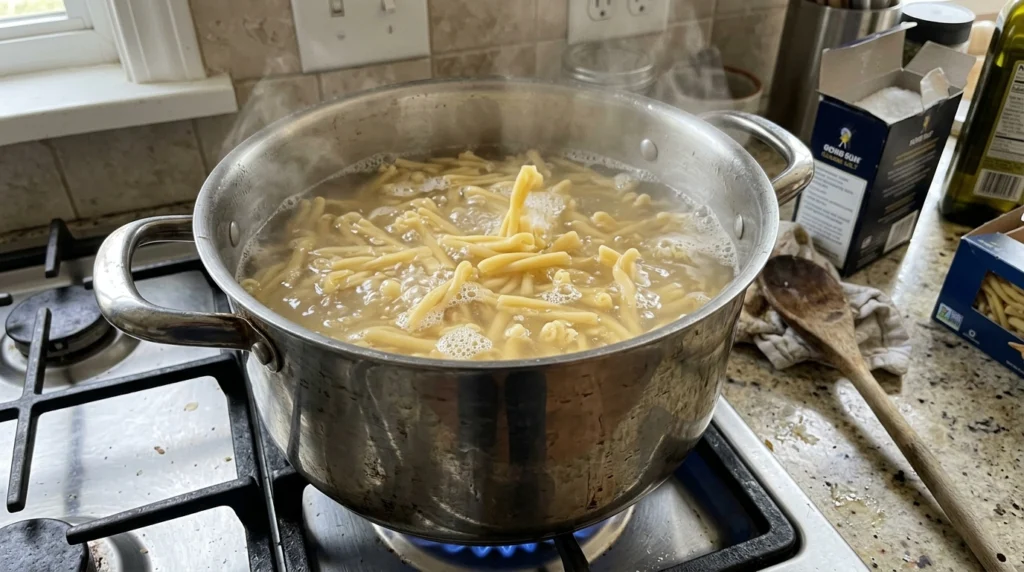
Bring a large pot of well-salted water to a boil. Add the casarecce and cook according to the package directions until it is just al dente. The pasta should still have a slight firmness in the middle when you bite it.
Before draining, scoop out 1 to 2 cups of pasta water and keep it nearby. Drain the pasta and set it aside rather than rinsing it.
- Brown the Sausage
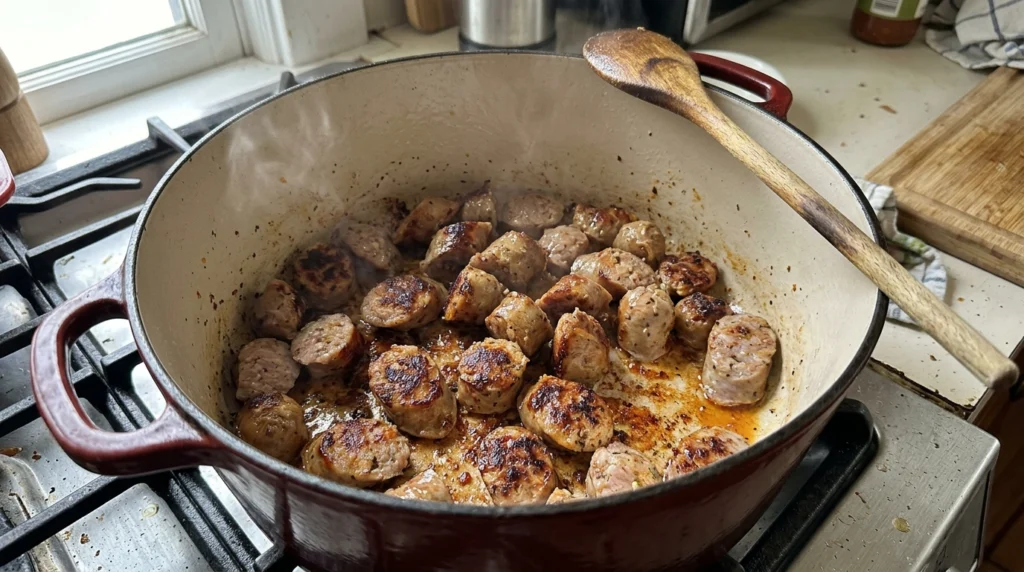
Place a large pot over medium heat and add the olive oil. Add the sliced sausage in a single layer and let it brown on both sides. You want browned edges and a little fat left in the bottom of the pot.
Don’t move the sausage around constantly. Letting it sit against the hot surface gives it better color and deeper flavor. If you’re using ground sausage, break it into small, bite-sized pieces instead.
- Build the Garlic and Herb Base
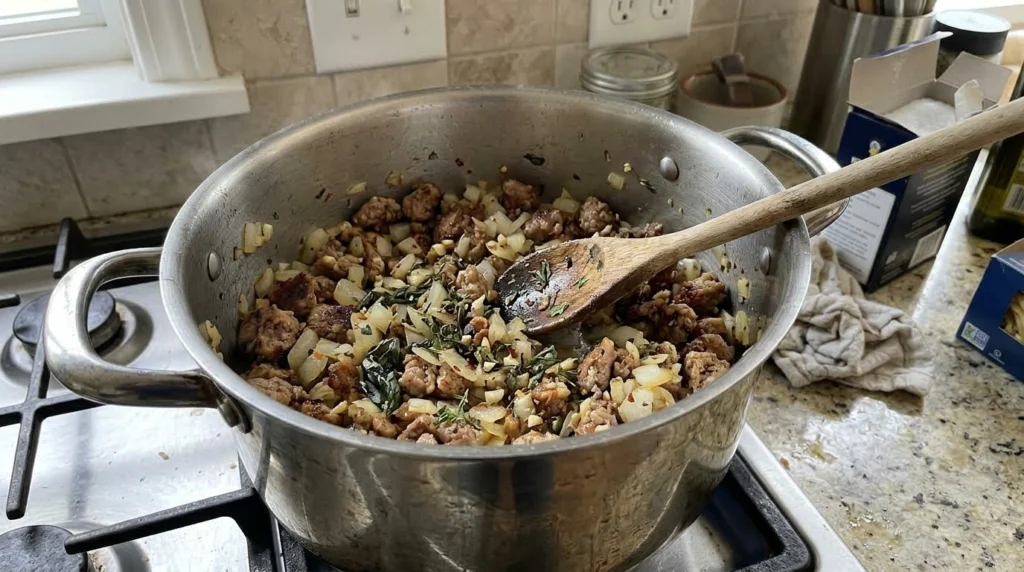
Add the diced onion, garlic, thyme, basil, rosemary, oregano, and red pepper flakes to the browned sausage. Stir and cook for about 2 to 3 minutes, until the onion begins to soften and the garlic smells fragrant.
Season lightly with salt and black pepper. Watch the garlic closely here — it should smell sweet and savory, not dark brown or bitter.
- Add the Tomatoes and Pasta Water
Pour in the 28 oz crushed tomatoes with all their juices. Stir in the tomato paste, then add 1 cup of the reserved pasta water.
Bring the mixture to a boil, then reduce the heat to low. Leave the pot uncovered and simmer for 15 to 20 minutes, stirring now and then. The sauce should become visibly thicker and cling to the spoon instead of running off like thin tomato sauce.
People tend to rush this step. Give the sauce enough time to reduce, and if it still looks watery after 20 minutes, continue simmering for about 5 more minutes before adding the pasta.
- Bring the Pasta Back to the Pot
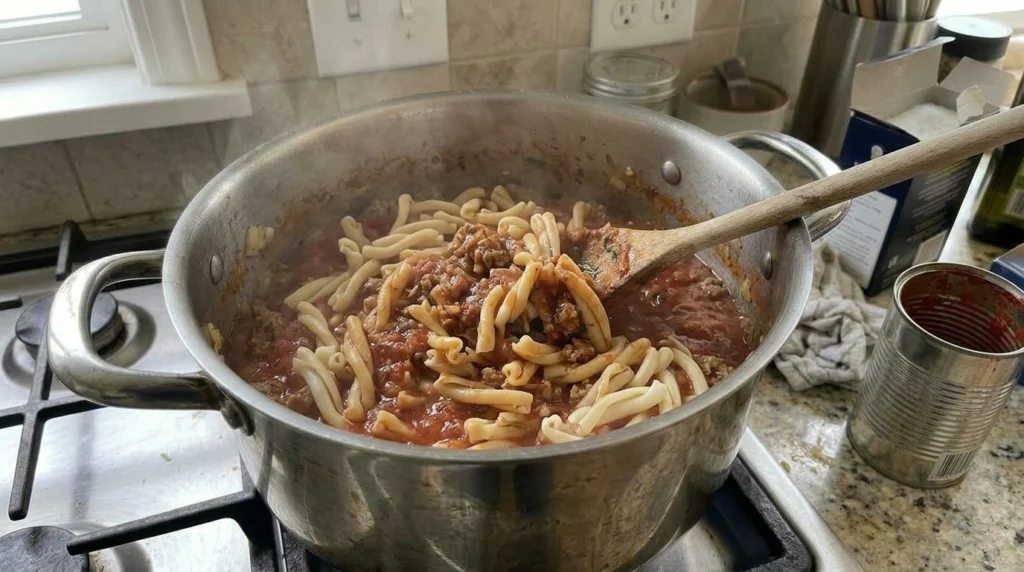
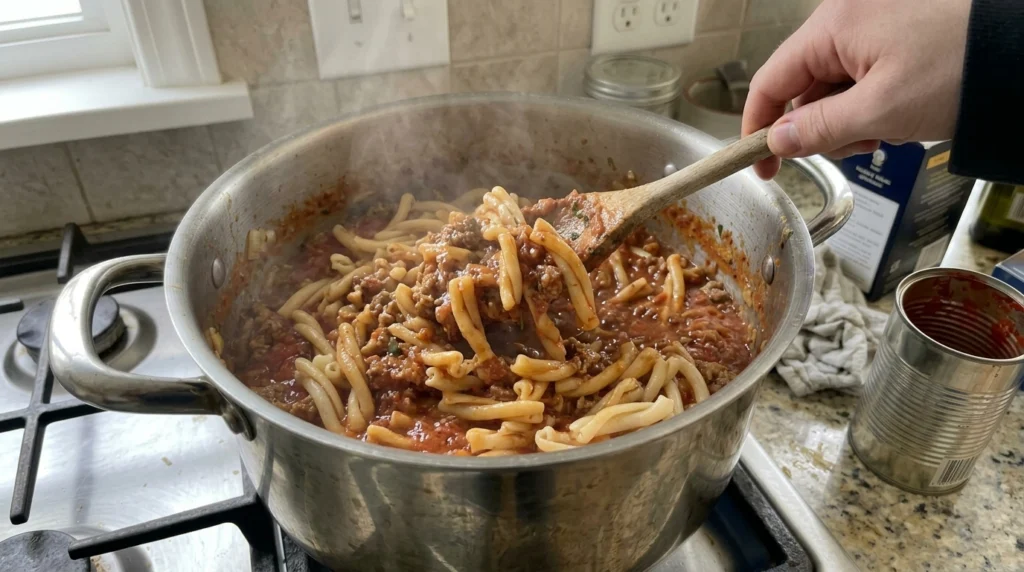
Add the drained casarecce to the thickened sauce. Stir gently until every curl is coated, then add the Parmesan and heavy cream.
Keep the heat low and toss until the cheese melts into the sauce. If everything looks too thick, add the remaining pasta water ¼ cup at a time until the sauce looks glossy and loose enough to coat the pasta.
- Taste and Finish
Taste the pasta before serving. Add more salt or black pepper if needed, and add a little extra red pepper flakes for more heat.
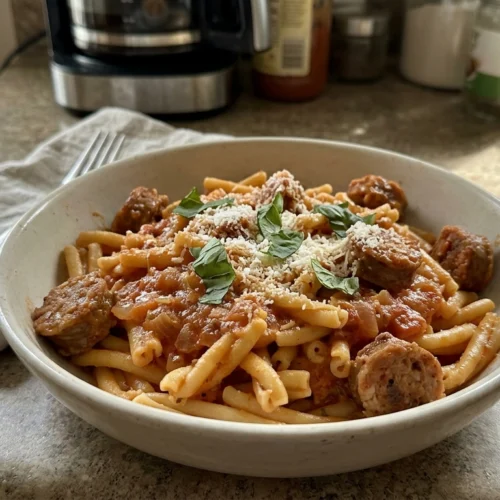
Spoon the pasta into warm bowls and finish with chopped fresh basil and more Parmesan. A small spoonful of burrata on top is optional, but it adds a cool, creamy contrast to the hot tomato sauce.
Casarecce Pasta Recipe

Equipment
- Large pot
- Colander
- Cutting board
- Chef's knife
- Wooden spoon or spatula
- Measuring cups and spoons
Ingredients
- 1 lb casarecce pasta
- 4 sausage links sliced
- 1 small onion diced
- 4 garlic cloves diced
- 3 sprigs fresh thyme
- 1 tbsp fresh basil chopped, plus more for garnish
- 2 sprigs fresh rosemary finely chopped
- 1 tsp dried oregano
- ½ tsp red pepper flakes plus more for garnish
- 28 oz canned crushed tomatoes undrained
- 6 oz canned tomato paste
- 1 cup freshly grated Parmesan
- 3 tbsp heavy cream
- 1 tbsp olive oil
- Salt and black pepper to taste
Instructions
- Cook casarecce in well-salted water until just al dente. Reserve 1 to 2 cups pasta water, then drain.
- Heat olive oil in a large pot over medium heat. Add sliced sausage and brown on both sides.
- Add onion, garlic, thyme, basil, rosemary, oregano, and red pepper flakes. Cook for 2 to 3 minutes until fragrant. Season with salt and pepper.
- Stir in crushed tomatoes, tomato paste, and 1 cup reserved pasta water. Bring to a boil.
- Reduce heat to low and simmer uncovered for 15 to 20 minutes, or until the sauce thickens. Continue for about 5 minutes longer if needed.
- Add cooked casarecce, Parmesan, and heavy cream. Stir gently until combined. Add reserved pasta water ¼ cup at a time if the sauce is too thick.
- Taste and adjust seasoning. Finish with basil, Parmesan, and red pepper flakes if desired.
Notes
- Make ahead: Prepare the sausage-tomato sauce up to 3 days ahead and cook fresh pasta when serving.
- Pasta water: Save more than you think you’ll need. A small splash can bring the finished sauce back to a smooth consistency.
- Sausage swap: Ground Italian sausage can replace the links at a 1:1 weight ratio.
- Leftovers: Refrigerate within 2 hours and use within 3 to 4 days; reheat to 165°F.
What to Serve with Casarecce Pasta
I like to serve this casarecce pasta while the sauce is still loose and hot — it thickens slightly as it sits, so getting it onto the table right away makes a difference.
For bread, garlic bread with a crisp edge works especially well. Use it to scoop up the tomato sauce left in the bowl.
For something creamy, add a small piece of burrata over each serving. Let it soften into the hot pasta before taking the first bite.
A simple vegetable side also works well when you want to stretch the meal. Try roasted zucchini, broccolini, or sautéed spinach with a little lemon. The fresh vegetable and acidity help balance the rich sausage and Parmesan.
For dinner guests, I like putting the Parmesan and red pepper flakes on the table instead of adding too much at once. Everyone can finish their own bowl to taste.
Storage and Reheating
Store leftover pasta in a shallow airtight container and refrigerate it within 2 hours of cooking. Use it within 3 to 4 days. FoodSafety.gov recommends reheating leftovers to 165°F (74°C) before serving.
For stovetop reheating, place the pasta in a skillet over medium-low heat. Add 1 to 2 tablespoons of water or broth per serving, cover, and stir every minute or two until the sauce loosens and the pasta is hot throughout.
For the microwave, put one serving in a microwave-safe bowl and add a splash of water. Cover loosely and heat in 45- to 60-second intervals, stirring between each round. Check that the center reaches 165°F before eating.
I prefer freezing the sauce separately when possible. Freeze it in an airtight container for up to 3 months, then thaw it in the refrigerator and reheat gently. Cook fresh pasta when you’re ready to serve so the casarecce keeps a better texture.
Casarecce Pasta FAQs
What is casarecce pasta and what can I use instead?
Casarecce is a short pasta with a curled, folded shape that holds thick sauces very well. Fusilli, cavatappi, gemelli, or penne are practical replacements. Use the same 1 lb amount and cook just until al dente.
Should I use sweet or spicy sausage for casarecce pasta?
Both work. Sweet Italian sausage lets the rosemary, thyme, and tomato stand out more, while hot Italian sausage gives the dish a noticeable kick. When using hot sausage, you may want to reduce the red pepper flakes.
Why is my sausage pasta sauce too watery?
The most common reason is not reducing the crushed tomatoes and pasta water long enough. Keep the pot uncovered and simmer until the sauce visibly thickens. Adding more Parmesan or cream won’t fix a watery base as well as proper reduction.
Why did my sauce split or look greasy instead of smooth?
This usually happens when the cream or Parmesan is added over heat that’s too high, or added too quickly. Bring the heat down to low before stirring in the cream, add the Parmesan gradually rather than all at once, and use pasta water — not more cream — to loosen the sauce if it looks broken.
Can I use fire-roasted or San Marzano tomatoes instead of regular crushed tomatoes?
Yes. Fire-roasted crushed tomatoes add a slightly smoky note that pairs well with the sausage, and San Marzano tomatoes tend to be less acidic and a bit sweeter. Either works as a 1:1 swap for the crushed tomatoes; you may need a touch less sugar-balancing (a pinch of sugar isn’t needed with San Marzano) than with standard canned tomatoes.
Can I bulk up this dish with vegetables without watering down the sauce?
Yes, but add them with the onion and garlic rather than at the end. Diced bell pepper, mushrooms, or baby spinach all work; mushrooms in particular should be browned separately first so they don’t release extra liquid into the sauce.
I make this kind of casarecce pasta when I want something hearty without turning dinner into a complicated project. The browned sausage, thick tomato sauce, and little curls of casarecce make every bite feel substantial, and the leftovers are just as useful for lunch the next day.
