
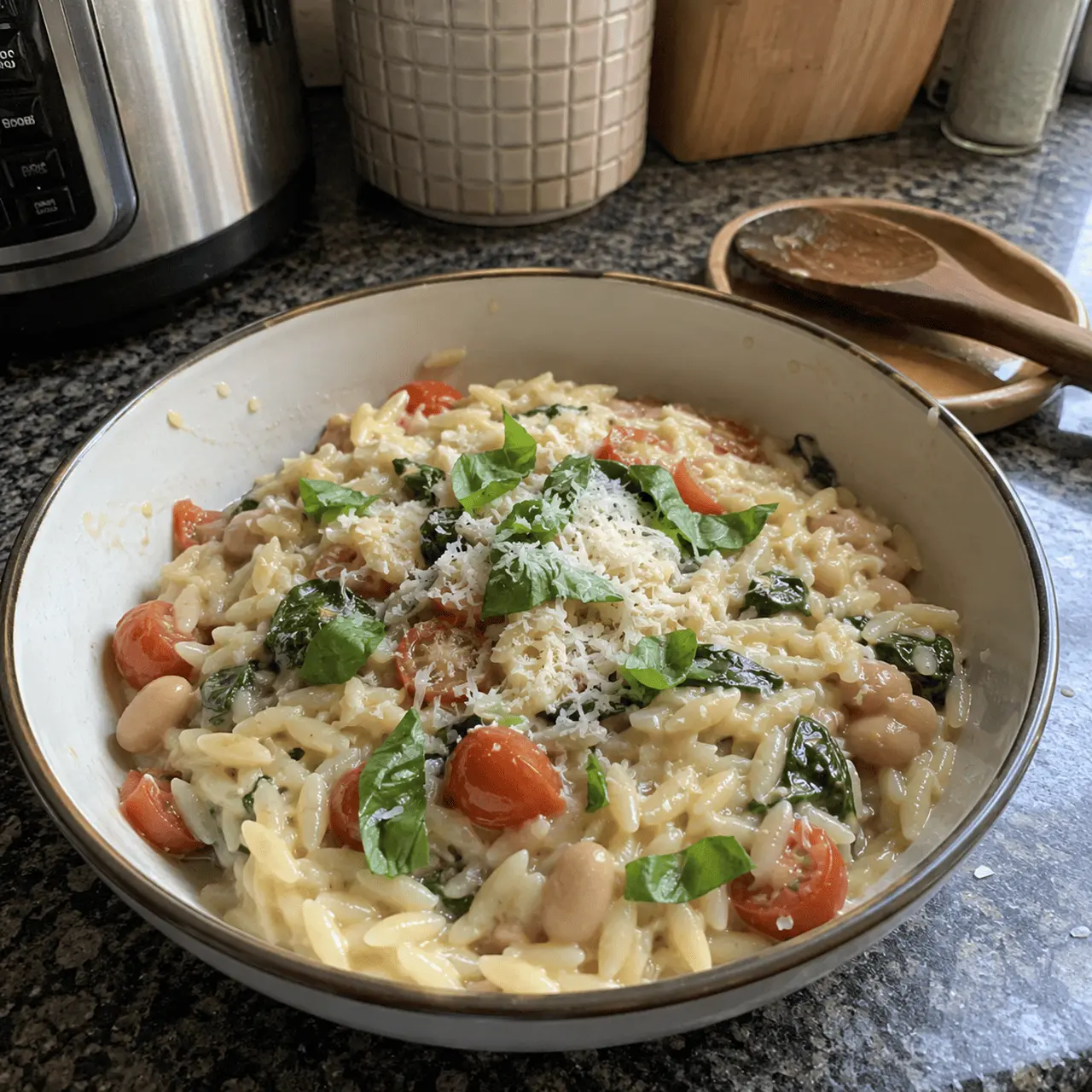
There are some evenings when I want pasta, but I don’t want a heavy cream sauce. I want something warm and cozy, but still fresh enough that I don’t feel weighed down afterward.
This creamy orzo solves that exact problem.
The first time I made this recipe, I was surprised by how creamy the pan became without adding a drop of heavy cream. The little rice-shaped pasta cooks right in the broth, so its natural starch stays in the pan and thickens the sauce as it cooks. I add creamy white beans, a splash of milk, and Parmesan at the end. The result is soft, savory, and silky.
I also love that this is a one-pan recipe. You won’t need a separate pot of pasta water or a complicated sauce. Everything comes together on the stove, which makes it a great choice for a busy weeknight.
The tomatoes add little bursts of sweetness, while spinach gives the dish a fresh finish. A little Parmesan brings everything together.
How Orzo Pasta Gets Silky Without Heavy Cream
The secret is not a fancy ingredient. The technique itself is what does the work.
Orzo looks like rice, but it is actually pasta. As it simmers in broth, it releases starch into the cooking liquid. The released starch thickens the broth, giving the dish a texture close to a quick risotto.
I don’t drain the orzo after cooking. Draining would wash away the liquid and starch the sauce depends on.
White beans help, too. I blend or mash some of them into the cooking mixture so they melt into the sauce. You don’t get a strong bean flavor. Instead, they make the dish thicker and add a little extra protein and fiber.
The final splash of milk and freshly grated Parmesan makes the texture even smoother.
You should end up with orzo pasta that is creamy enough to coat a spoon but still loose enough to move around the bowl.
The Biggest Mistake to Avoid With Orzo Pasta
I watch this step more closely than any other.
Orzo absorbs liquid quickly. If you cook it over high heat or leave the pan unattended, the broth can disappear before the pasta is tender. You may end up with pasta that is sticky and undercooked instead of creamy.
Keep the heat at a gentle simmer and stir often. If the pan starts looking dry while the orzo still has a firm center, add a splash of hot broth or water.
Don’t wait until the pasta is completely cooked to fix it.
Also, remember that the sauce thickens as it sits. I like to take the pan off the heat while it still looks slightly looser than I want. By the time I spoon it into bowls, it has usually reached the perfect consistency.
Creamy Orzo Pasta Ingredients (And Why Each One Matters)
- 1 tablespoon extra-virgin olive oil — Gives the onion and tomatoes a flavorful base. Use a good everyday olive oil rather than something very mild.
- 1 small yellow onion, finely diced — Adds sweetness and a savory foundation as it softens in the pan.
- 3 garlic cloves, minced — Brings the main savory flavor. Fresh garlic works best here.
- 1 cup cherry or grape tomatoes, halved — Adds little pockets of sweetness and acidity. Choose tomatoes that look firm and juicy.
- 1 cup canned cannellini beans, drained and rinsed — This is the creamy element. Some of the beans are mashed into the sauce while the rest stay whole for texture.
- 1 cup dry orzo pasta — The star of the recipe. Its small shape cooks quickly and releases starch into the broth.
- 2 1/2 cups low-sodium vegetable broth — Provides the cooking liquid and seasons the orzo from the inside as it cooks. Chicken broth also works if you don’t need the dish to be vegetarian.
- 1 teaspoon dried Italian seasoning — Adds a simple blend of herbs without making the ingredient list too long.
- 1/2 teaspoon smoked paprika — Gives the tomatoes and beans a gentle smoky depth. You can leave it out for a more traditional flavor.
- 1/2 cup unsweetened milk — Loosens the sauce and adds richness without using heavy cream. Whole milk gives the richest result, but unsweetened soy milk works well too.
- 1/2 cup freshly grated Parmesan cheese — Melts into the warm orzo and gives the sauce a salty, savory finish. Grate it yourself for the smoothest melt.
- 2 cups baby spinach, roughly chopped — Wilts into the hot pasta and adds color without needing a separate cooking step.
- 1 tablespoon fresh lemon juice — Brightens the finished dish and keeps the creamy sauce from tasting flat.
- 1/4 cup fresh basil, torn — Adds a fresh finish that works especially well with the tomatoes.
- Salt and black pepper, to taste — Start lightly because the broth and Parmesan already contain salt.
Smart Substitutions
- Cannellini beans → Great Northern or butter beans
Use the same 1 cup amount. Butter beans make the sauce especially soft and creamy, while Great Northern beans have a slightly firmer texture. - Milk → Unsweetened soy milk
Replace the 1/2 cup milk with 1/2 cup unsweetened soy milk. Avoid sweetened or vanilla varieties because they will change the flavor. - Parmesan → Pecorino Romano
Use about 1/3 cup Pecorino instead of 1/2 cup Parmesan. Pecorino is saltier and sharper, so taste before adding more salt. - Spinach → Baby kale
Replace the 2 cups spinach with 2 cups finely chopped baby kale. Give it an extra couple of minutes to soften. - Cherry tomatoes → 1 medium ripe tomato
Chop it into small pieces and use it in the same way. You may need an extra minute or two for the tomato to soften and release its juices. - Vegetable broth → Chicken broth
Use the same 2 1/2 cups. Chicken broth gives the dish a deeper savory flavor but will no longer make it vegetarian.
How to Make Creamy Orzo Pasta Without Cream (Step-by-Step)
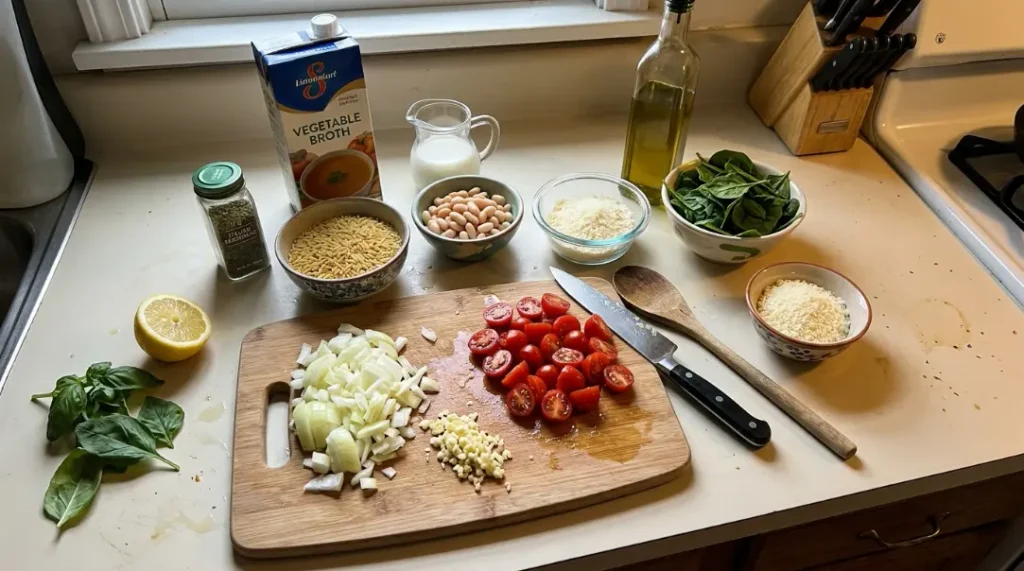
- Get Everything Ready
Dice the onion, mince the garlic, and halve the tomatoes before you turn on the stove. Drain and rinse the beans, then roughly chop the spinach.
Measure the broth and milk too. Orzo cooks quickly, so having everything beside the pan makes the process much easier.
- Soften the Onion and Garlic
Heat the olive oil in a large deep skillet over medium heat. Add the onion with a small pinch of salt and cook until soft and translucent, about 3 to 4 minutes.
Add the garlic and cook for about 30 seconds. You should smell the garlic clearly, but don’t let it turn dark.
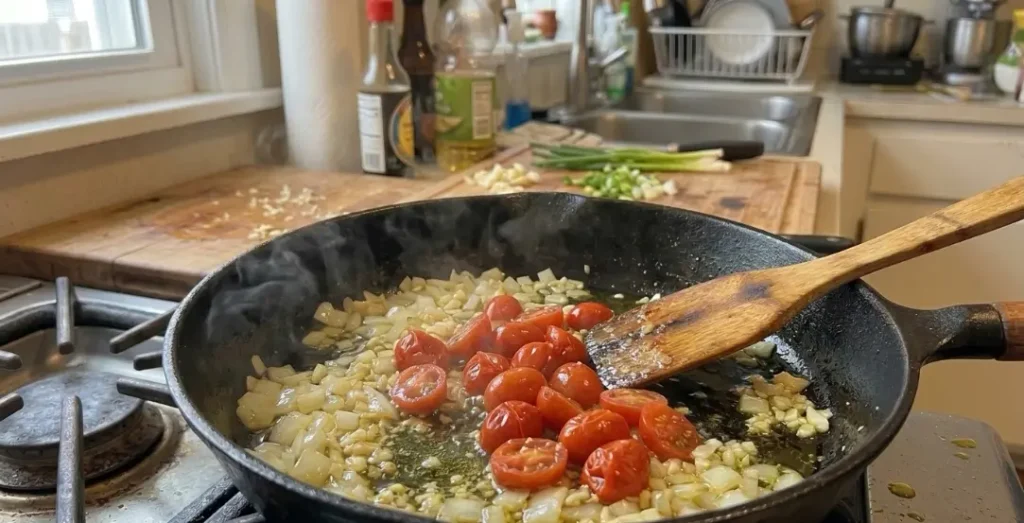
- Cook Down the Tomatoes
Add the halved tomatoes, Italian seasoning, and smoked paprika. Stir everything together and cook for about 3 minutes.
The tomatoes should start to soften and release some juice. If a few begin to wrinkle or collapse, that’s exactly what you want.
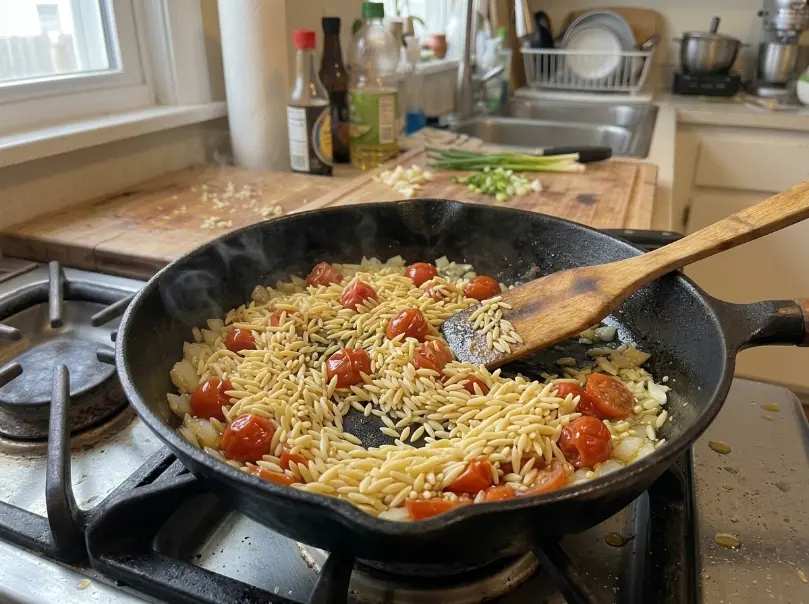
- Toast the Orzo
Add the dry orzo directly to the skillet. Stir it through the vegetables for about 1 minute.
The pasta will pick up some of the oil and tomato flavor. You may notice a light toasted smell. Don’t let the orzo become deeply browned.
- Add the Beans and Broth
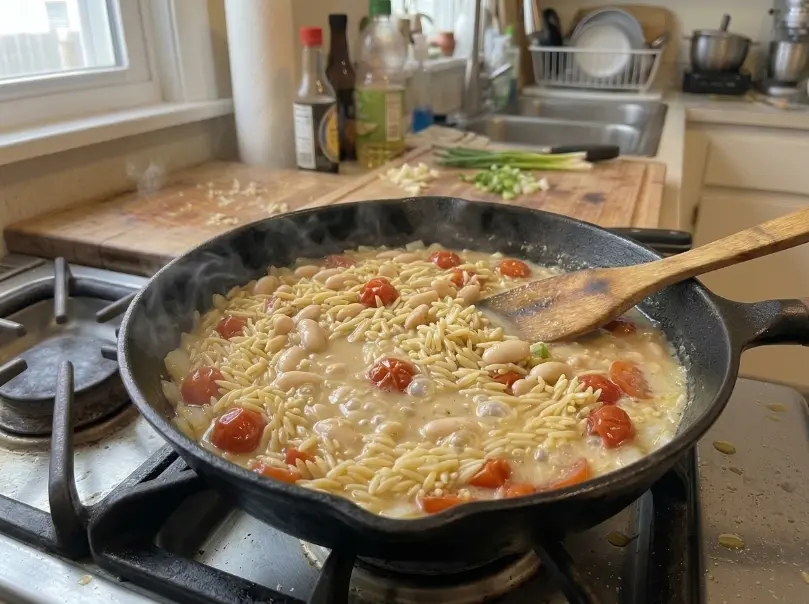
Add the cannellini beans, but first mash about a third of them against the side of the pan with a fork — this is what melts into the sauce and gives it body. Add the remaining beans whole for texture, then pour in the vegetable broth. Season with a little black pepper and stir well.
Bring the mixture to a gentle boil, then reduce the heat to medium-low. The liquid should bubble softly rather than boil aggressively.
- Simmer the Orzo
Cook uncovered for about 9 to 11 minutes, stirring every minute or two so the pasta doesn’t stick to the bottom.
This is the step where timing matters most. The orzo should become tender but still have a tiny bit of bite. If the liquid disappears too soon, add 2 to 3 tablespoons of hot broth or water at a time.
- Make It Creamy
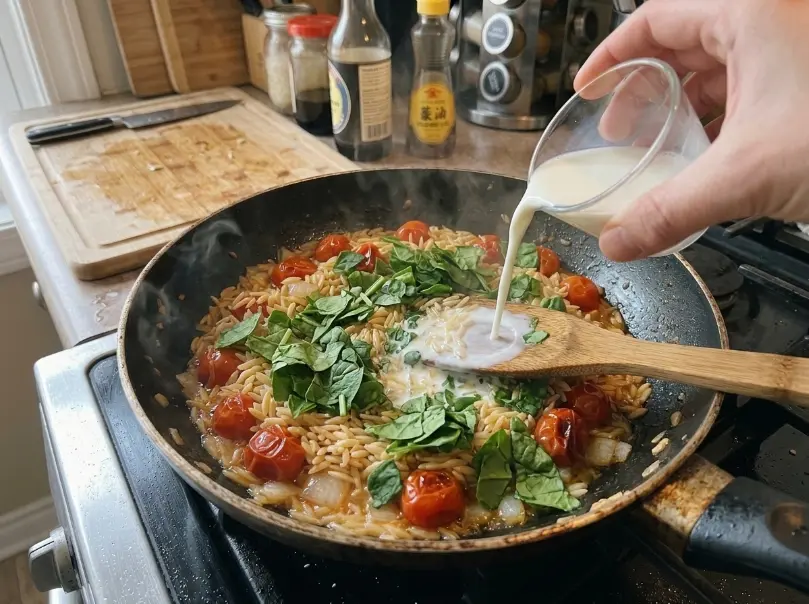
Once the orzo is nearly tender, stir in the milk and add the chopped spinach. Cook for another 1 to 2 minutes.
The spinach will collapse quickly. At this point, the pan should look creamy and slightly loose rather than dry.
- Add Parmesan Off the Heat
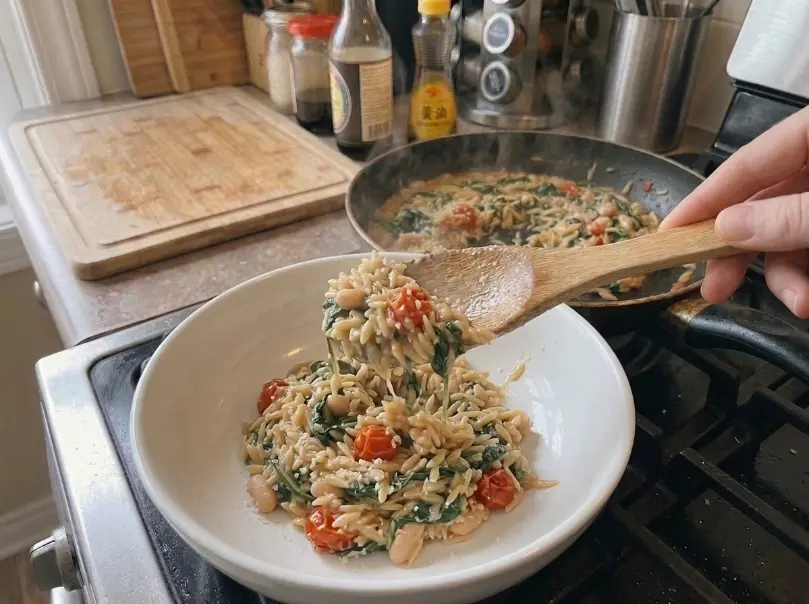
Turn off the heat and add the freshly grated Parmesan. Stir gently until the cheese melts into the sauce.
Don’t boil the Parmesan. The gentle residual heat is enough to melt it smoothly. Add a splash of broth if the sauce looks too thick.
- Finish With Lemon and Basil
Add the lemon juice and most of the fresh basil. Stir and taste.
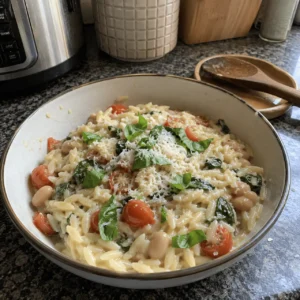
Add more black pepper, salt, or lemon juice if needed. Let the orzo rest for about 2 minutes before serving. The sauce will thicken slightly as it settles.
Orzo Pasta Recipe

Equipment
- Large deep skillet or sauté pan
- Wooden spoon or silicone spatula
- Fork or potato masher (for mashing beans)
- Chef's knife
- Cutting board
- Measuring cups and spoons
- Grater for Parmesan
Ingredients
- 1 tablespoon extra-virgin olive oil
- 1 small yellow onion finely diced
- 3 garlic cloves minced
- 1 cup cherry or grape tomatoes halved
- 1 cup canned cannellini beans drained and rinsed
- 1 cup dry orzo pasta
- 2 1/2 cups low-sodium vegetable broth
- 1 teaspoon dried Italian seasoning
- 1/2 teaspoon smoked paprika
- 1/2 cup unsweetened milk
- 1/2 cup freshly grated Parmesan cheese
- 2 cups baby spinach roughly chopped
- 1 tablespoon fresh lemon juice
- 1/4 cup fresh basil torn
- Salt and black pepper to taste
Instructions
- Heat olive oil in a large deep skillet over medium heat. Add onion and a pinch of salt. Cook for 3 to 4 minutes until softened.
- Add garlic and cook for 30 seconds.
- Add tomatoes, Italian seasoning, and smoked paprika. Cook for about 3 minutes until the tomatoes begin to soften.
- Stir in the dry orzo and toast for 1 minute.
- Mash about a third of the cannellini beans with a fork, then add them along with the remaining whole beans and the vegetable broth. Bring to a gentle boil.
- Reduce heat to medium-low and simmer uncovered for 9 to 11 minutes, stirring often.
- When the orzo is nearly tender, stir in milk and chopped spinach. Cook for 1 to 2 minutes.
- Remove from heat and stir in Parmesan until melted.
- Add lemon juice and basil. Taste and adjust salt and pepper.
- Rest for 2 minutes, then serve with extra Parmesan and basil if desired.
*Nutrition estimated using the USDA FoodData Central database and may vary based on specific brands and substitutions used.
What to Serve With Orzo Pasta
I usually serve this orzo as a main dish with a simple tomato and cucumber salad. The fresh vegetables give you a nice contrast to the warm, creamy pasta.
For a heartier dinner, top each bowl with grilled chicken, garlic shrimp, or crispy roasted chickpeas.
Roasted salmon is another pairing I come back to often — the bright lemon in the orzo pairs especially well with fish.
If you want something more Mediterranean, add a little crumbled feta and chopped parsley just before serving. The feta is saltier than Parmesan, so use it as a finishing touch rather than stirring in a large amount.
For a cozy dinner in cooler weather, I like it with roasted broccoli or caramelized zucchini.
Storage and Reheating
Creamy orzo thickens quite a bit after refrigeration. Expect that — it’s part of how the starch and Parmesan set as they cool.
Store leftovers in an airtight container in the refrigerator for up to 3 days.
For the stovetop, place the orzo in a skillet over medium-low heat. Add 2 to 3 tablespoons of broth or water per serving and stir gently until hot. Add another splash if it still looks too thick.
For the microwave, place one serving in a microwave-safe bowl and add 1 to 2 tablespoons of broth or water. Cover loosely and heat in 30-second intervals, stirring between each one.
I don’t recommend freezing this recipe if you want the best creamy texture. The milk, Parmesan, beans, and pasta can all change texture after freezing and thawing. If you do freeze it, use an airtight container and keep it for up to 1 month, then thaw overnight in the refrigerator and reheat slowly with extra broth.
Frequently Asked Questions
Can you make creamy orzo without heavy cream?
Absolutely. Orzo releases starch as it cooks, which naturally thickens the cooking liquid. In this recipe, white beans, milk, and Parmesan add even more body without needing heavy cream.
Why is my creamy orzo pasta too thick?
The orzo absorbed more liquid than expected. See the reheating tips above — the fix is the same: warm broth, added gradually.
Can I make creamy orzo pasta without milk?
Yes. Use extra vegetable broth instead, but the finished dish will be slightly less rich. You can also add a little more Parmesan for body, although I would still keep some liquid in the pan so the orzo doesn’t become dry.
Should I rinse orzo before cooking it?
No. For this particular method, you want the natural starch on the pasta. That starch moves into the cooking liquid and helps create the creamy texture.
What protein goes well with creamy orzo pasta?
Grilled chicken, shrimp, salmon, and crispy chickpeas all work well. I especially like shrimp because it cooks quickly and the lemony, creamy orzo makes a good base for it.
Can I make creamy orzo ahead of time?
You can make it a few hours ahead, but it will thicken as it sits. When reheating, add broth or water a little at a time and stir over low heat until the sauce becomes creamy again. For the best texture, I prefer serving it shortly after cooking.
Conclusion
I come back to this creamy orzo pasta whenever I want comfort food without reaching for heavy cream. The orzo does most of the work, while the beans, Parmesan, tomatoes, and spinach make it hearty enough for dinner.
I hope this one becomes a regular in your kitchen too.
