
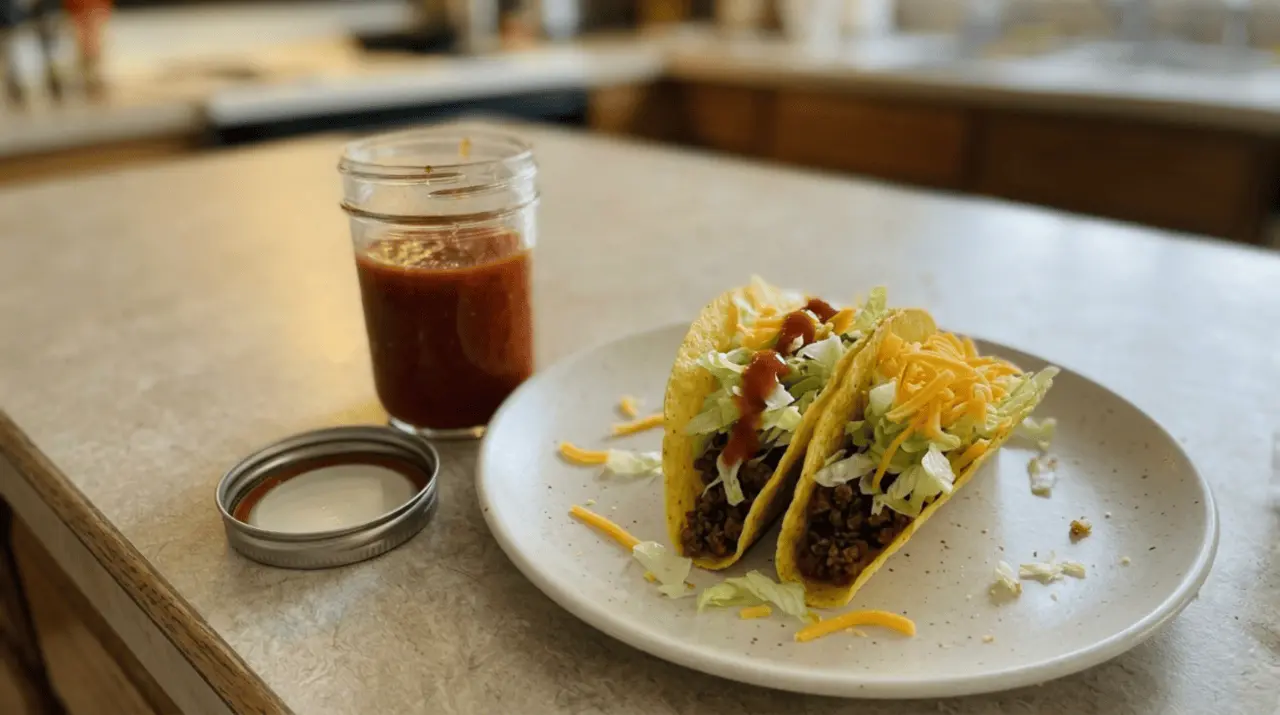
Some sauces I make because the meal needs them. I make this one because I like having it around. Taco Time hot sauce has that thin, tangy texture that works its way into every bite instead of sitting heavily on top of the food.
I wanted my homemade version to have that same easy-to-drizzle texture, but with a little more pepper flavor. The key is using dried arbol peppers with a tomato base rather than relying on cayenne alone. You get heat from the peppers, while tomato sauce keeps the flavor rounded.
I also don’t make this sauce extremely thick. A taco sauce should pour easily from a squeeze bottle or small jar — after simmering, it should coat a spoon lightly but still run off it. I tested this with 3 arbol peppers and with 5: three gave the closest match to the original’s mild-medium heat, while five pushed it into genuinely spicy territory that masked the tomato base.
The recipe is simple enough for a weeknight. You roast the dried peppers, blend them with water, then simmer everything with tomato sauce and spices. The hardest part is knowing when to stop cooking. If you take it too far, the sauce becomes thick and almost paste-like.
Once it cools, the sharp vinegar flavor settles down. I usually like it even more the next day.
Why Arbol Peppers Make This Taco Time Hot Sauce Taste Different
Taco Time’s 5 Alarm hot sauce is a tomato-based sauce built on red chili paste, vinegar, red pepper, onion, garlic, spices, salt, and sugar.
For a homemade Taco time hot sauce version, dried arbol peppers are an easy way to build that red pepper character. They have a clean, direct heat and blend into a smooth sauce when processed well.
I don’t depend on the peppers for all the heat, though. A small amount of cayenne gives you better control. You can make the sauce mild by reducing the cayenne, or add more after simmering if you want a stronger kick.
The tomato sauce also matters. Use plain tomato sauce rather than seasoned pasta sauce. Pasta sauce can contain basil, oregano, cheese, or other flavors that pull the recipe away from the simple taco-sauce profile.
Getting the Thin, Smooth Taco Sauce Texture
I pay close attention to this part every time I make it.
The sauce should be smooth enough to drizzle over a taco without dropping in thick spoonfuls. Start with the measured water, then add a tablespoon or two more after simmering if your sauce looks too thick.
Don’t skip the blending step with the roasted arbol peppers. Dried peppers can leave small pieces behind if they aren’t processed well. A high-speed blender gives the smoothest result, but a regular blender or food processor works too.
A short simmer then brings everything together. Similar homemade taco sauces use a tomato base, vinegar, dried spices, and a gentle simmer to develop flavor and slightly thicken the sauce.
Ingredients for Taco Time Hot Sauce
- 1 ½ cups plain tomato sauce — This forms the body of the sauce. Choose an unseasoned tomato sauce with a smooth texture.
- 1 cup water — Keeps the sauce loose enough to drizzle. You can add a little more later if needed.
- 3 dried arbol peppers — These give the sauce its direct chili flavor and noticeable heat. Remove the stems before roasting.
- 1 teaspoon white vinegar — Adds the sharp tang that makes the sauce taste brighter.
- 1 teaspoon onion powder — Builds a savory onion flavor without adding pieces of fresh onion.
- 1 teaspoon ground cumin — Adds warm, earthy depth.
- 1 teaspoon chili powder — Gives the sauce a fuller chili flavor instead of heat alone.
- ½ teaspoon cayenne pepper — This controls the extra heat. Start here and increase it after cooking if needed.
- ½ teaspoon salt — Brings the tomato and spices into balance.
- ½ teaspoon black pepper — Adds a mild peppery bite that works well with the dried chiles.
I don’t add a large amount of sugar here. The tomato already brings some natural sweetness, and keeping the sauce fairly simple lets the vinegar and chile flavors stand out.
Smart Substitutions for This Copycat Hot Sauce
- Dried arbol peppers → 1–2 teaspoons crushed red pepper flakes
If you can’t find arbol peppers, use about 1 teaspoon for a milder sauce or up to 2 teaspoons for more heat. Blend the flakes directly with the tomato mixture. - White vinegar → apple cider vinegar
Use the same 1 teaspoon. Apple cider vinegar gives the sauce a slightly softer, fruitier tang. - Plain tomato sauce → passata
Replace the 1 ½ cups tomato sauce with 1 ½ cups passata. If your passata is very thin, reduce the water to ¾ cup at first. - Cayenne pepper → extra arbol pepper
Add one additional dried arbol pepper if you’d rather build the heat from dried chile instead of cayenne. The finished sauce will have a little more pepper flavor. - Chili powder → ancho chili powder
Use the same 1 teaspoon. Ancho powder will make the sauce darker and less sharp, with a mild dried-chile flavor. - Fresh tomato base → canned whole tomatoes
Blend about 1 ¾ cups canned whole tomatoes until smooth, then strain them. You may need a few extra minutes of simmering because the mixture can be more watery.
How to Make Taco Time Hot Sauce
- Prepare the Arbol Peppers
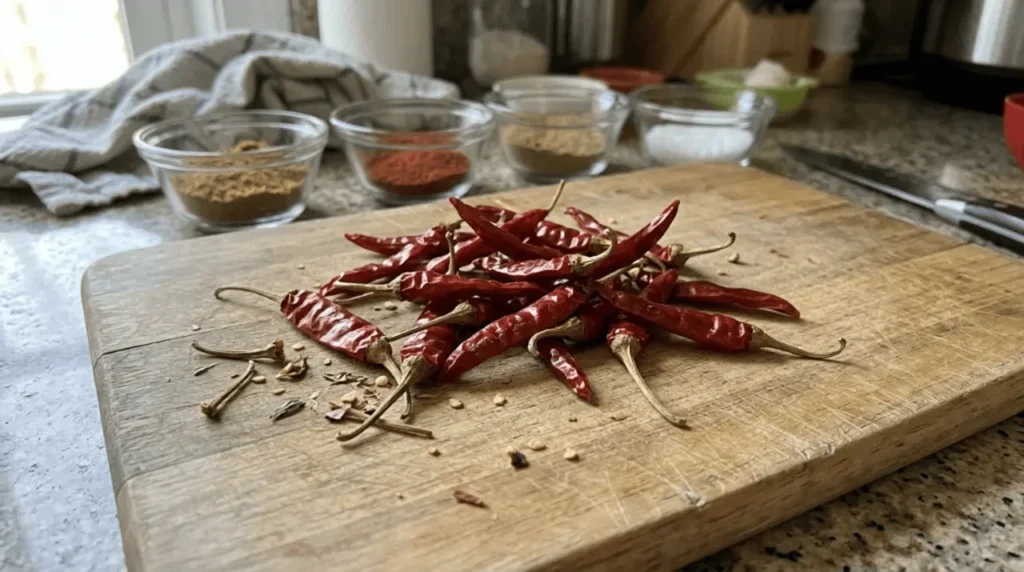
Heat your oven to 350°F. Remove the stems from the dried arbol peppers and arrange them on a small baking sheet.
Roast them for about 8–10 minutes, watching closely. You want them fragrant and slightly toasted, not blackened. If they smell bitter or heavily burnt, start over with fresh peppers.
- Blend the Peppers With Water
Let the peppers cool for a few minutes. Add them to a blender with ½ cup of the water from the recipe.
Blend until you have a fairly smooth red pepper paste. Stop once or twice to scrape the sides if pieces of pepper are sticking.
You don’t need to make it perfectly silky at this point. The later simmer will help the pepper mixture blend into the tomato base.
- Combine Everything in the Saucepan
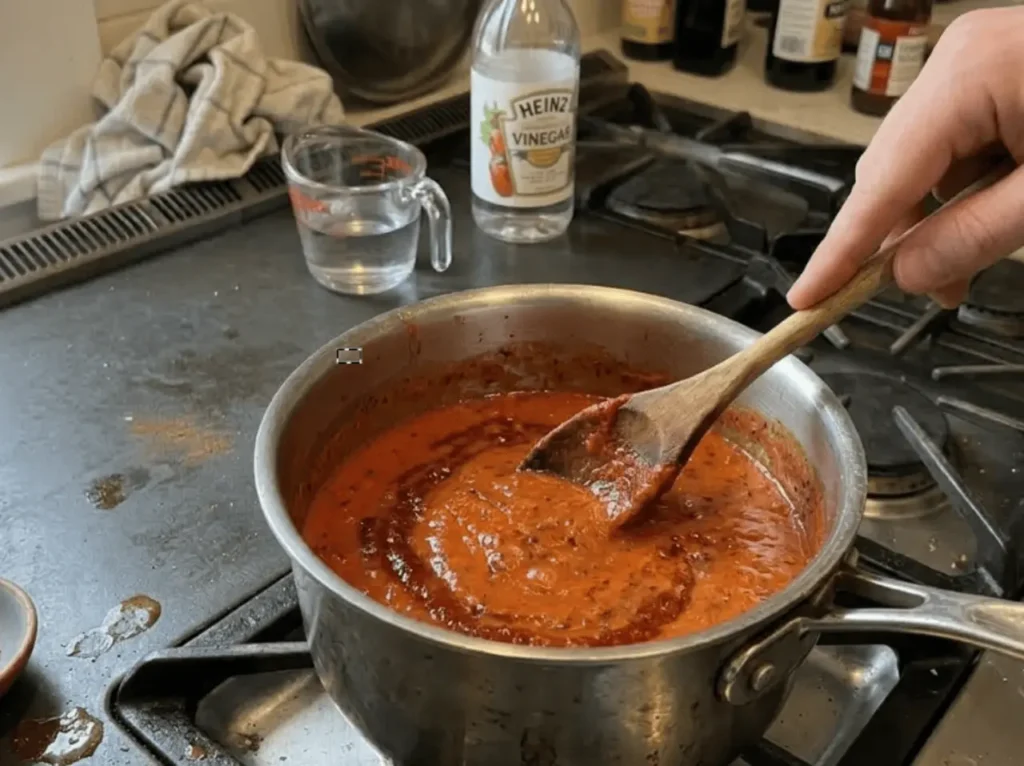
Pour the pepper paste into a medium saucepan. Add the tomato sauce, remaining ½ cup water, vinegar, onion powder, cumin, chili powder, cayenne, salt, and black pepper.
Stir until the mixture looks evenly red and there are no dry pockets of seasoning. Keep the heat around medium while the sauce comes together.
- Simmer Gently
Bring the sauce just to a gentle simmer, then lower the heat.
Let it simmer uncovered for about 15–20 minutes, stirring every few minutes. You should see small bubbles rather than a hard boil.
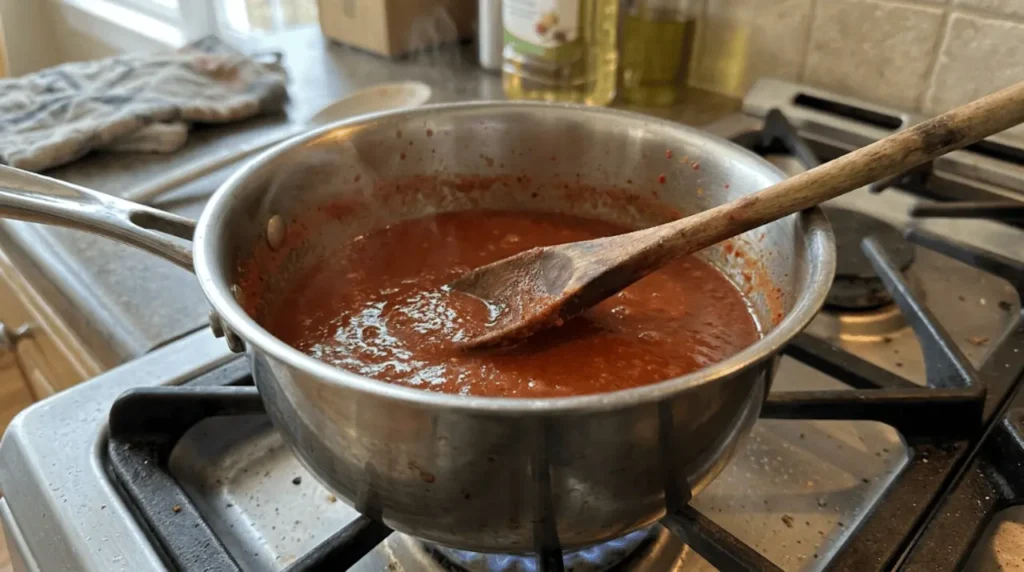
The sauce will darken slightly and become a little thicker. If it starts sticking to the bottom, your heat is too high.
- Check the Consistency and Heat
Take a clean spoon and stir the sauce. It should look smooth and lightly coat the spoon, but it should still flow easily.
Taste a small amount once it has cooled enough to handle safely. Add another pinch of cayenne if you want more heat, or a small splash of vinegar if the tomato flavor feels too heavy.
If the sauce is thicker than you want, stir in water 1 tablespoon at a time until it flows off the spoon again. It will also thicken slightly more as it chills, so aim for a texture that looks slightly thinner than you want the final sauce to be.
- Cool and Store
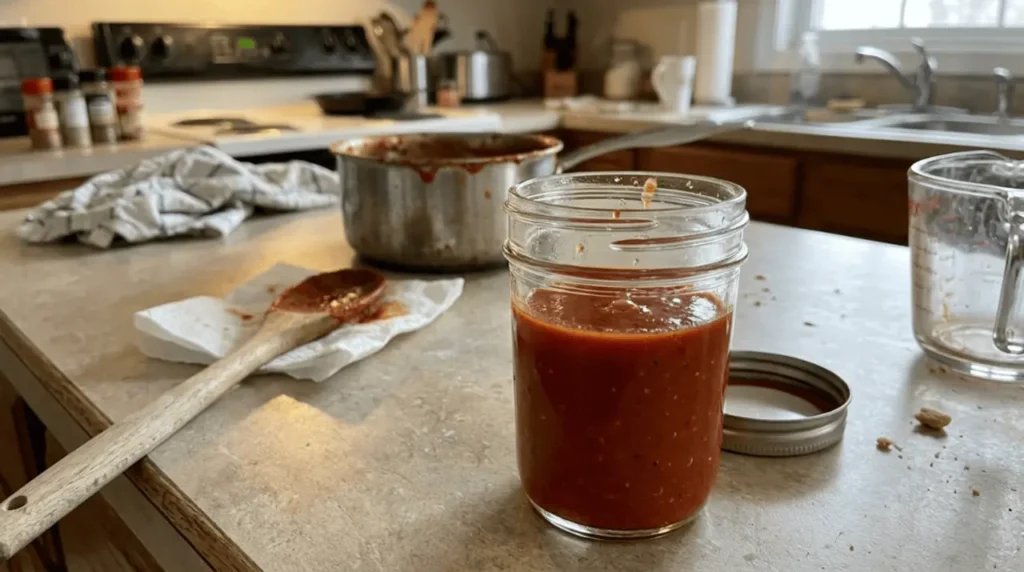
Remove the saucepan from the heat and let the sauce cool before transferring it to a clean glass jar or squeeze bottle.
The flavor will taste sharper while the sauce is hot. Once chilled, the vinegar and spices settle into the tomato base.
For the fullest flavor, I like to refrigerate it overnight before using it.
What to Serve With Taco Time Hot Sauce
Reach for this sauce on foods that need a little extra heat and acidity.
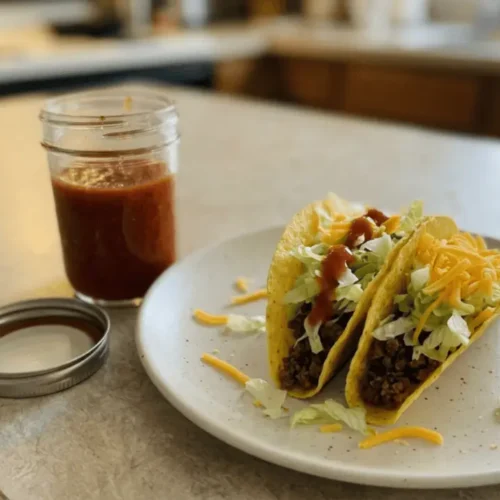
- Ground beef tacos: Drizzle it over seasoned beef, shredded lettuce, cheese, and diced tomato.
- Chicken tacos: The vinegar in the sauce cuts through richer chicken fillings nicely.
- Breakfast burritos: Add a spoonful with scrambled eggs, potatoes, cheese, and sausage.
- Quesadillas: Use it for dipping instead of pouring it inside. The crisp tortilla stays crisp longer.
- Nachos: Drizzle a small amount over melted cheese, beans, jalapeños, and ground beef.
- Taco bowls: Add it after cooking so the fresh tang doesn’t disappear into the rice.
- Refried beans: Stir in a teaspoon or two while warming them.
- French fries: A little hot sauce with seasoned fries makes an easy late-night snack.
I especially like it with crunchy beef tacos. The thin sauce gets into the spaces between the meat and toppings without making the shell soggy as quickly as a thick sauce can.
Taco Time Hot Sauce Recipe

Equipment
- Baking sheet
- Blender or food processor
- Medium saucepan
- Wooden spoon or spatula
- Clean glass jar or squeeze bottle
Ingredients
- 1 ½ cups plain tomato sauce
- 1 cup water divided
- 3 dried arbol peppers stems removed
- 1 teaspoon white vinegar
- 1 teaspoon onion powder
- 1 teaspoon ground cumin
- 1 teaspoon chili powder
- ½ teaspoon cayenne pepper
- ½ teaspoon salt
- ½ teaspoon black pepper
Instructions
- Heat oven to 350°F. Remove stems from arbol peppers and roast for 8–10 minutes, until fragrant and lightly toasted.
- Cool peppers briefly, then blend them with ½ cup water until a smooth paste forms.
- Add the pepper paste, tomato sauce, remaining water, vinegar, onion powder, cumin, chili powder, cayenne, salt, and black pepper to a saucepan.
- Bring to a gentle simmer over medium heat, then reduce to low.
- Simmer uncovered for 15–20 minutes, stirring occasionally, until slightly thickened.
- Taste after cooling slightly. Adjust heat, salt, or vinegar as needed.
- Cool completely and transfer to a clean airtight container.
- Refrigerate and use within 5–7 days for best quality.
Notes
- Make ahead: Refrigerate overnight for a more blended, rounded flavor.
- Heat adjustment: Reduce cayenne to ¼ teaspoon for a milder sauce or increase it gradually after simmering.
- Texture fix: If the chilled sauce is too thick, stir in water 1 tablespoon at a time.
- Storage: Keep refrigerated and freeze extra sauce for up to 3 months in small portions.
Storage and Reheating
Store the cooled sauce in a clean, airtight container in the refrigerator.
For the homemade version here, I recommend using it within 5–7 days for the best quality. Homemade sauces do not have the same controlled processing and preservative system as commercial bottled sauces, so I don’t recommend treating this as a shelf-stable pantry sauce.
You don’t really need to reheat taco sauce. Take out the amount you need and let it sit for a few minutes.
If you want it warm, place the desired amount in a small saucepan over low heat for 1–2 minutes. Stir often and don’t let it boil.
You can also freeze the sauce for up to 3 months in small portions. Ice cube trays work well when you only need a tablespoon or two at a time. Homemade taco sauces can separate slightly after freezing, so stir well after thawing.
Frequently Asked Questions
Is Taco Time hot sauce the same as Taco Time 5 Alarm sauce?
Not exactly. Taco Time’s published ingredient statement identifies its 5 Alarm sauce separately and lists red chili paste, tomato paste, vinegar, red pepper, onion, garlic, spices, sugar, and other ingredients.
This homemade recipe is a copycat-style sauce inspired by that general flavor profile. It isn’t an official Taco Time formula.
Why does my taco hot sauce taste too sour?
Too much vinegar can make a tomato-based sauce taste sharp instead of balanced. Start with the amount in the recipe and taste after simmering.
If yours is already too sour, add a little more tomato sauce and a pinch of salt. You can also add a very small amount of sugar, about ⅛ teaspoon at a time, if needed.
How spicy is this sauce, and can I make it milder?
With three arbol peppers and ½ teaspoon of cayenne, this version has a noticeable but manageable kick — heat can vary slightly because dried peppers aren’t identical from package to package.
For a milder sauce, drop to ¼ teaspoon cayenne and remove the seeds and inner membranes from the arbol peppers before roasting; you can also swap one arbol pepper for a milder dried red chile. For more heat, add cayenne in small amounts after simmering — it’s easier to add heat back than to take it out.
Can I make Taco Time hot sauce without arbol peppers?
Yes. Arbol peppers give the sauce a particular dried-chile flavor, but they’re not essential. Crushed red pepper flakes or additional cayenne can provide the heat.
The flavor will be slightly different, especially if you replace all the dried peppers with cayenne.
Does Taco Time hot sauce get better after sitting?
I find that it does. The sauce tastes sharper immediately after cooking because the vinegar and spices are still very noticeable.
After several hours in the refrigerator, those flavors settle into the tomato base. Resting homemade taco sauce overnight is a common tip among taco-sauce recipes generally, since it gives the spices more time to blend.
Can I make this sauce ahead of time for a party?
Yes — it actually improves with a day’s rest, so it’s a good make-ahead item. Prepare it up to 3 days in advance, keep it refrigerated in an airtight jar, and give it a stir before serving since the spices can settle.
Why I Keep This Taco Time Hot Sauce on Hand
I like making this sauce when I’m already cooking tacos because it takes very little extra work. Once you have a jar in the fridge, even simple ground beef and cheese tacos feel a little more finished.
If you make it, start with the recipe as written before adjusting the heat. You can always add more cayenne, but it’s much harder to take it back out.
