
Vegetarian meal prep does not have to mean filling five containers with the same rice-and-vegetable bowl.
My approach is to prep the ingredients rather than the finished meals. One batch of rice can become a tofu bowl, fried rice, or a curry side. The same roasted vegetables can go into a wrap, salad, pasta, or eggs.
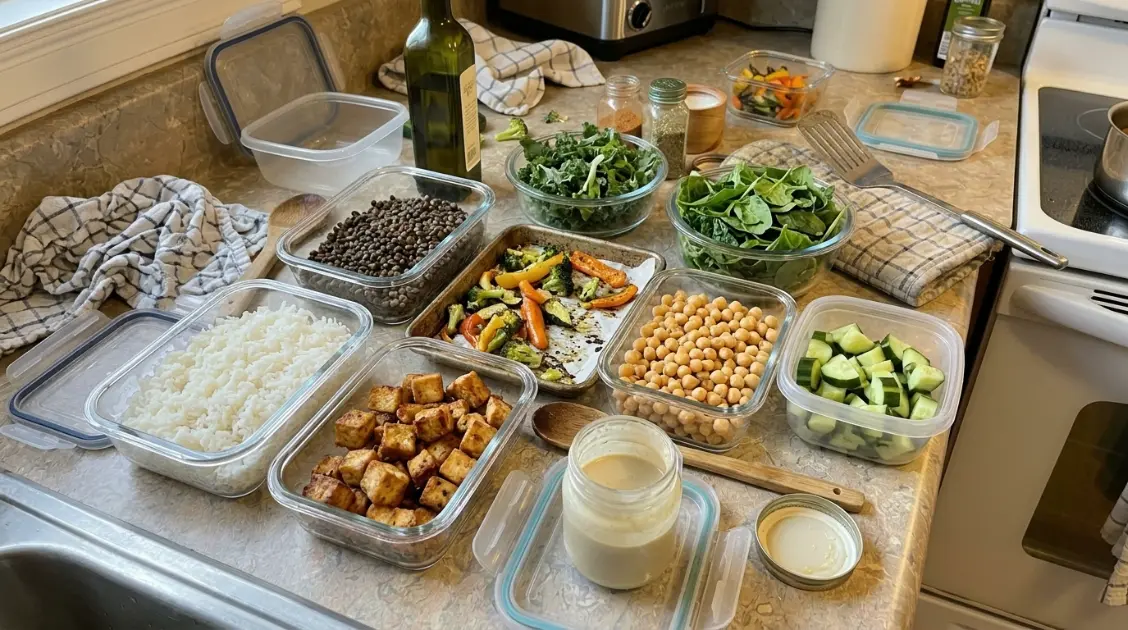
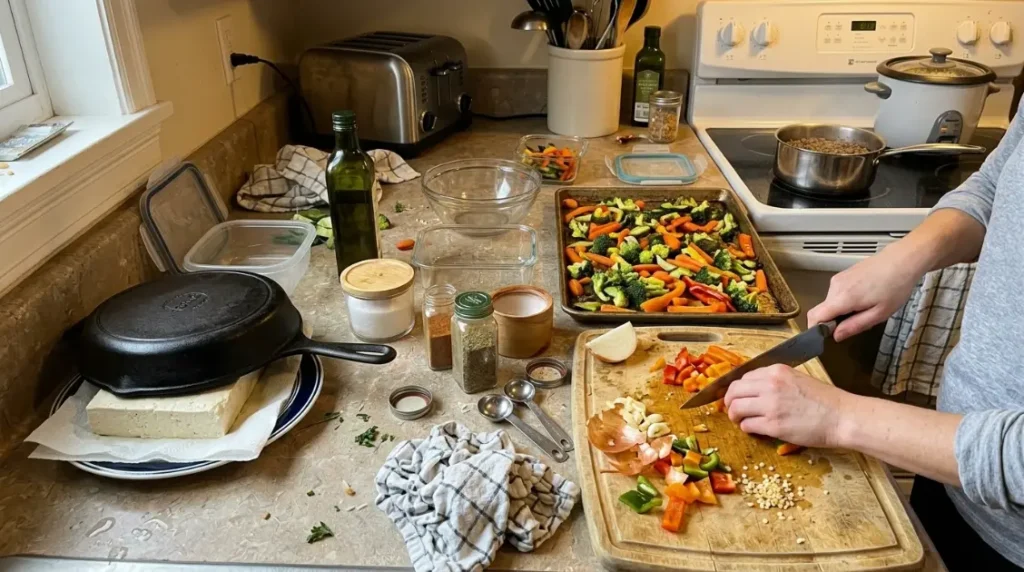
I tested this approach last Sunday with about an hour of prep. I cooked 1½ cups of dry rice, roasted a full tray of vegetables, prepared crispy tofu, and mixed a tahini sauce. That gave me enough components for five lunches and three dinners, but I changed the combination each time instead of eating the same meal repeatedly.
The important part was not cooking eight different recipes. It was choosing a few ingredients that could work together in different ways.
Here are some of my favorite easy vegetarian meal preparation ideas for breakfasts, lunches, dinners, and snacks.
The Vegetarian Meal Prep System I Actually Use
I don’t try to prepare every meal for the entire week. That creates more work and usually leaves me with several identical containers by Wednesday.
Instead, I prepare four main components:
- One grain: usually rice, quinoa, or farro
- One or two proteins: tofu, lentils, chickpeas, or eggs — I’ll sometimes prep two if I want more variety across the week
- One tray of vegetables: roasted until tender but still firm enough to reheat
- One sauce: something that can work with bowls, wraps, vegetables, or grains
I keep those components separate and combine them differently throughout the week. Breakfast is usually handled separately with overnight oats, yogurt bowls, or egg muffins.
This takes less planning than cooking five complete meals, but it gives me more variety when I’m actually hungry.
Cook One or Two Filling Grains
Rice is an obvious choice, but it is not the only one.
Brown rice, white rice, quinoa, couscous, farro, barley, and even roasted potatoes can form the base of several meals.
I cooked 1½ cups of dry rice, which came out to about 4 cups cooked — enough for four bowl-sized portions with some left over for fried rice. I let it cool on a sheet pan for about 15 minutes before dividing it into shallow containers. I like to keep the grain fairly plain because that gives me more options later.
For example, cooked rice can become:
- A tofu and vegetable bowl
- Fried rice with eggs
- A chickpea curry side
- A burrito bowl
- Rice topped with beans and avocado
Do not overcook your grains. Soft rice or mushy quinoa becomes less pleasant after reheating.
If you know you will make fried rice later, slightly firmer, chilled rice works especially well.
Make a Big Batch of Beans or Lentils
Beans and lentils are some of the easiest vegetarian foods to keep ready in the refrigerator.
Canned chickpeas are useful when you want speed. Lentils are also great because they cook quickly and do not need soaking.
You can season them simply with salt, pepper, garlic, cumin, paprika, or a little olive oil.
Keep some plain if you want flexibility.
Then turn them into:
- Chickpea salad
- Lentil soup
- Grain bowls
- Wrap fillings
- Curry
- Tacos
- Toast toppings
A warm bowl of lentils with rice and roasted vegetables can make a surprisingly filling lunch.
For a higher-protein meal, combine legumes with foods such as tofu, eggs, Greek yogurt, cottage cheese, or cheese. Several vegetarian meal-prep approaches use these foods because they make meals more filling and easier to build ahead.
Roast a Large Tray of Vegetables
This is one of the meal-prep steps I use most.
Cut vegetables into pieces that are close in size so they cook at about the same rate. Good choices include:
- Broccoli
- Cauliflower
- Bell peppers
- Carrots
- Zucchini
- Sweet potatoes
- Onions
- Mushrooms
I roasted one full sheet pan — about 2 heads of broccoli, 3 bell peppers, and a pound of carrots — tossed with 2 tablespoons of olive oil and salt, at 425°F for 25 minutes.
Halfway through, I split the tray: half got tossed with garlic and dried oregano, the other half with chili powder and cumin, so one tray gave me two distinct flavor profiles for the week.
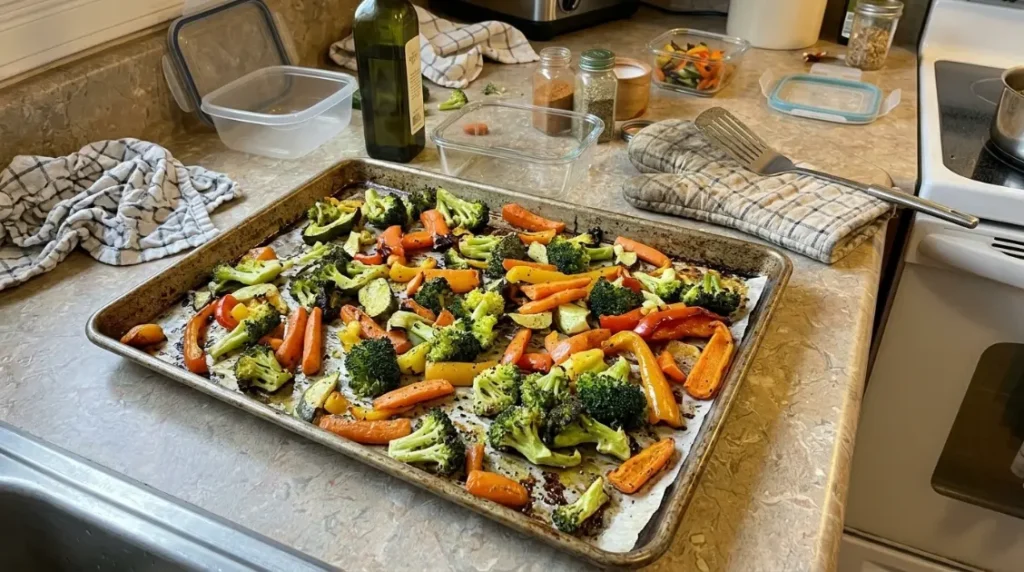
I take the vegetables out while they still have a little bite. I learned to do this because the first time I reheated a full batch, the softer pieces turned noticeably mushier after microwaving. Stopping them a little early gives them enough room to soften without becoming limp in the next meal.
You can season different portions after cooking. One container might get garlic and herbs, while another gets chili powder and cumin.
Keep Crispy Foods Separate
Not everything belongs in the same meal-prep container.
Foods that are supposed to stay crisp need this rule the most.
If you make roasted chickpeas, crispy tofu, toasted nuts, seeds, croutons, or tortilla strips, store them separately. Add them just before eating.
Otherwise, moisture from vegetables and sauces will soften them.
The same rule applies to salad dressing. Keep the dressing in a small container and add it when you are ready to eat.
This one extra step — keeping dressing separate until you eat — makes a leftover lunch taste noticeably fresher.
Prepare Tofu So It Reheats Well
Tofu is one of my favorite vegetarian meal prep foods because it works with so many flavors.
The first time I meal-prepped tofu, I skipped pressing it entirely and ended up with soggy, rubbery cubes that never crisped up, even after 15 minutes in the pan. Now I always drain and press it for at least 20 minutes — a paper towel–wrapped block with a heavy skillet on top works fine — before cutting it into cubes.
A little soy sauce, garlic, ginger, sesame oil, or chili sauce can change the whole dish.
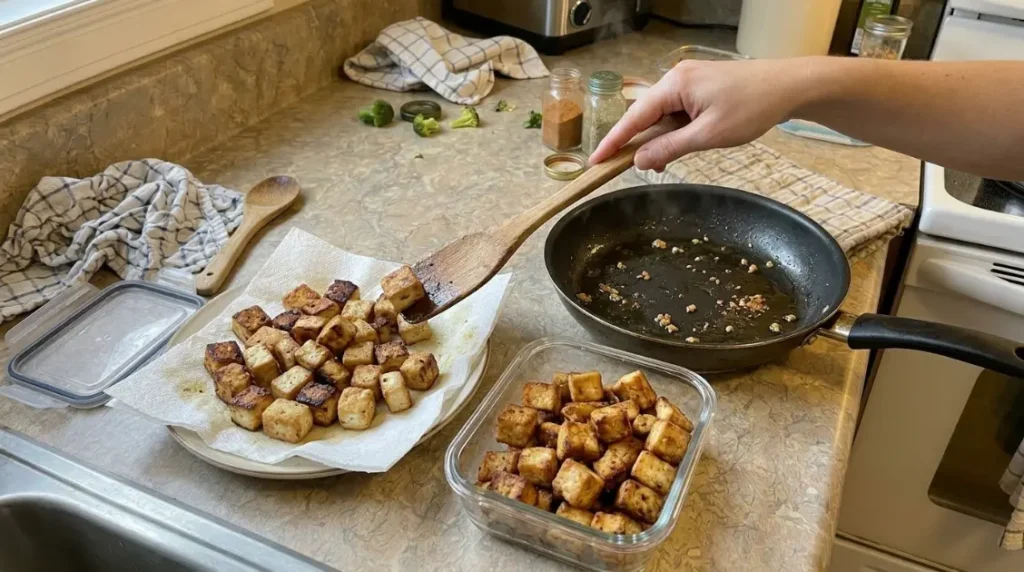
For meal prep, I like tofu that is browned on the outside but not dried out inside.
Store it separately from very wet sauces when possible. Add the sauce when reheating if you want the edges to stay firmer.
Tofu also works in stir-fries, rice bowls, wraps, salads, and noodle dishes. Crispy tofu and tofu-based dishes are common meal-prep choices because they can be refrigerated and reheated for several days.
Make One Sauce That Can Do Several Jobs
A good sauce can keep simple meal-prep food from tasting repetitive.
You do not need five different sauces. One or two are enough.
I usually make one sauce rather than several. For this prep, I use a simple tahini-lemon sauce because it works with rice bowls, roasted vegetables, wraps, and salads.
My Tahini-Lemon Sauce
¼ cup tahini
2 tablespoons lemon juice
1 small garlic clove, minced
Water as needed to thin
I make it thick enough to use as a dip first. Then I thin individual portions with a little water when I need a bowl dressing or drizzle for vegetables.
If you prefer a different flavor, the same idea works with peanut sauce, yogurt-herb sauce, vinaigrette, or a soy-ginger sauce.
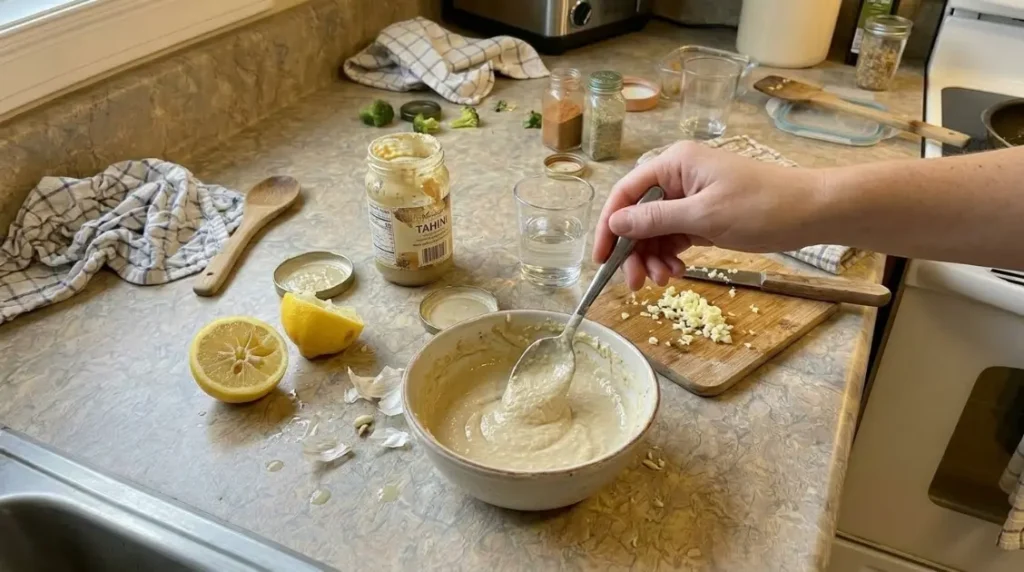
I especially like sauces that can be loosened with water.
A thick tahini sauce can become a bowl dressing. Add more lemon juice and it works as a salad dressing. Thin it further and drizzle it over roasted vegetables.
This is one reason I prefer preparing sauces separately rather than mixing everything together on prep day.
Easy Vegetarian Breakfast Meal Prep Ideas
Breakfast is often where meal prep saves the most time.
Overnight Oats
Mix oats with milk or yogurt and add chia seeds if you like a thicker texture.
Keep the fruit and crunchy toppings separate until morning.
For overnight oats, I keep the base simple and change the toppings rather than preparing five different jars.
My usual combinations are:
- Banana + peanut butter
- Apple + cinnamon
- Strawberries + yogurt
I keep crunchy toppings such as nuts or granola separate until breakfast. They stay noticeably better that way than when they sit in the oats overnight.
Egg Muffins
Whisk eggs with chopped vegetables and cheese, then bake in a muffin pan.
Let them cool completely before refrigerating.
They make a quick breakfast with toast or fruit. You can also add spinach, mushrooms, peppers, or leftover roasted vegetables.
Yogurt Breakfast Bowls
Keep Greek yogurt, fruit, granola, nuts, and seeds ready in separate containers.
In the morning, assemble a bowl in a couple of minutes.
This style of breakfast works especially well when you prepare the main components ahead instead of building every bowl several days in advance.
Easy Vegetarian Lunch Ideas
Lunch should be filling enough that you are not searching for snacks an hour later.
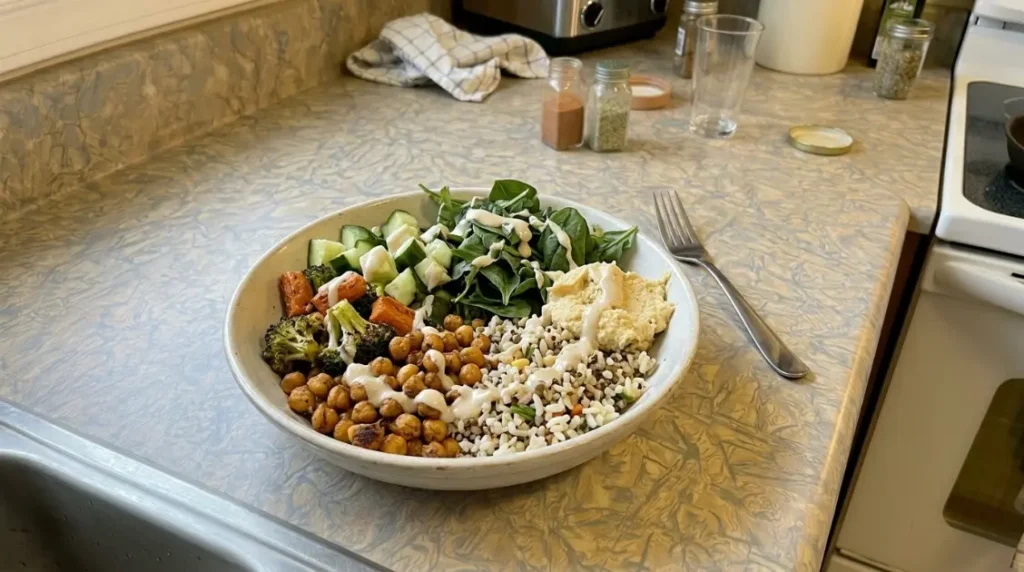
Chickpea Grain Bowls
Start with rice, quinoa, or farro.
Add chickpeas, roasted vegetables, cucumber, greens, and a spoonful of hummus. Finish with a lemony dressing.
You can change the flavor with different spices or sauces.
Lentil Soup
Soup is one of the easiest foods to prepare in a large batch.
Cook lentils with onions, carrots, potatoes, tomatoes, garlic, and vegetable broth. Season with cumin, paprika, black pepper, or herbs.
The soup keeps well and reheats easily. Lentil-based meal prep is also useful when you want a filling vegetarian meal with both protein and fiber.
Hummus Wraps
Spread hummus over a whole-wheat tortilla.
Add roasted vegetables, cucumber, lettuce, shredded carrot, and feta if you eat dairy.
Roll it tightly and wrap it well.
For the freshest texture, keep wet ingredients such as tomatoes separate until you are ready to eat.
Three Easy Vegetarian Dinner Combinations
Dinner does not need to be completely cooked ahead.
Instead, prepare the parts.
- Tofu Rice Bowls
Use cooked rice, crispy tofu, broccoli, carrots, and a soy-ginger sauce.
Warm everything except fresh toppings. Add green onions, sesame seeds, or cucumber at the end. As with any reheated leftovers, the USDA recommends heating to 165°F for food safety.
- Chickpea Curry
Cook chickpeas with onion, tomatoes, garlic, spices, and coconut milk.
Make a large batch and serve it with rice or flatbread during the week.
Curries are particularly useful for meal prep because the flavors often settle together after a night in the refrigerator.
- Quick Vegetable Fried Rice
Use cold cooked rice, frozen peas, carrots, corn, and eggs.
Cook the vegetables first, then add the rice and sauce. Push everything to one side of the pan and scramble the eggs before mixing them through.
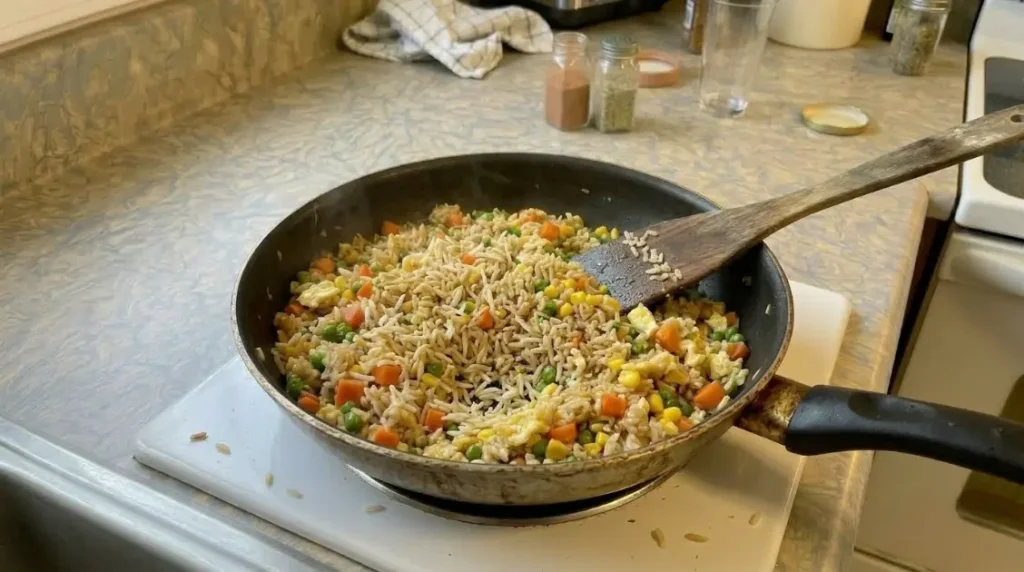
It’s an easy way to use up leftover vegetables instead of letting them sit forgotten in the refrigerator.
How I Would Prep Everything in One Hour
You do not have to cook in recipe order.
Start with the food that takes the longest.
0–10 Minutes
Wash and chop 2 heads of broccoli, 3 bell peppers, and a pound of carrots. Start 1½ cups of rice in the rice cooker.
10–30 Minutes
Roast the vegetables at 425°F while 1 cup of dry lentils simmers in 3 cups of broth for about 20 minutes.
30–40 Minutes
Press and cube 1 block of tofu, then pan-fry until golden, about 8 minutes.
40–50 Minutes
Whisk together a tahini sauce — ¼ cup tahini, 2 tablespoons lemon juice, 1 minced garlic clove, and water to thin — and portion out snacks.
50–60 Minutes
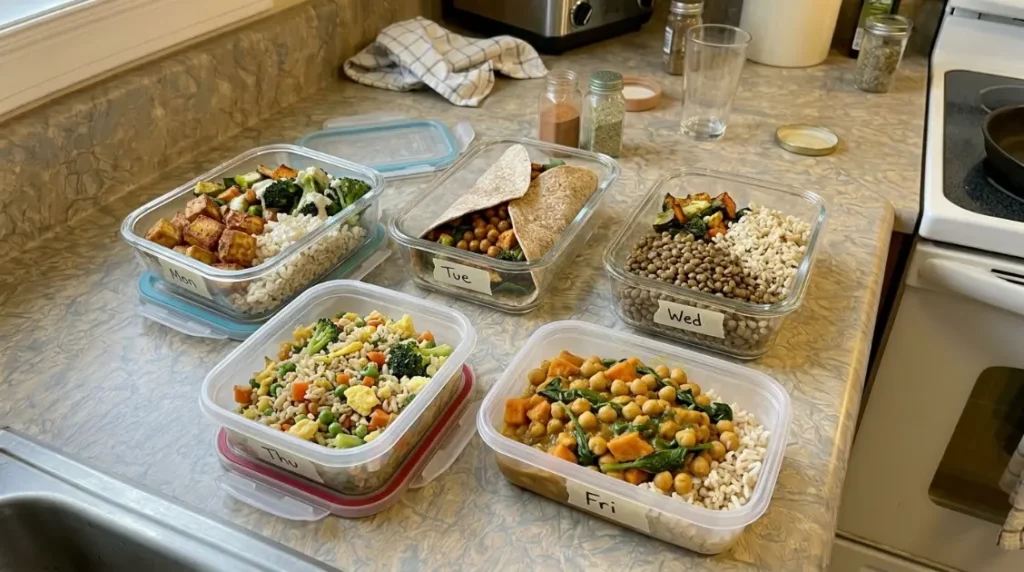
Cool everything appropriately, then pack into containers and label the lentils to eat first since they’re the most perishable.
While one thing cooks, work on another.
Store Ingredients Instead of Building Every Meal
By Wednesday, having everything stored separately — rice in one container, roasted vegetables in another, tofu and sauce in their own jars — meant I could turn the same ingredients into a completely different meal each day instead of eating the same bowl on repeat.
One night that looked like a stir-fry; the next, a wrap with the same vegetables and a different sauce.
Simple Vegetarian Meal Prep Shopping List
You can build many meals from a short grocery list.
Protein-Rich Foods
- Chickpeas
- Lentils
- Black beans
- Tofu
- Eggs
- Greek yogurt
- Cottage cheese
- Cheese
Grains and Starches
- Rice
- Oats
- Quinoa
- Whole-wheat tortillas
- Potatoes
Vegetables
- Broccoli
- Carrots
- Bell peppers
- Spinach
- Cucumber
- Tomatoes
- Onions
- Sweet potatoes
Flavor Builders
- Garlic
- Ginger
- Lemons
- Soy sauce
- Olive oil
- Tahini
- Hummus
- Peanut butter
- Dried herbs and spices
A stocked pantry makes vegetarian meal prep much easier because you can change the flavor of the same basic ingredients without buying a long list of specialty foods.
Vegetarian Meal Prep Tips That Actually Help
A few small habits make a big difference.
- Keep track of when you prepared each container and follow recommended storage times. Don’t rely on smell or appearance alone to decide whether leftovers are safe — according to the USDA, harmful bacteria may not change the food’s smell, taste, or appearance.
- Keep sauces separate when you want vegetables or grains to stay firm.
- Use shallow containers so food cools more evenly.
- Label older containers so you eat them first.
- Freeze extra portions if you know you will not eat them soon.
- Do not prep every meal for the entire week. Some foods are simply better fresh.
- Leave room for leftovers. A planned leftover night can save you from cooking again.
- Use what you already have. Meal prep is also a good way to use vegetables before they go bad.
A Simple 5-Day Vegetarian Meal Prep Example
Here is how I would put the ideas together for one week:
| Day | Meal | Prepared components used |
| Monday | Tofu rice bowl | Rice + tofu + roasted vegetables + sauce |
| Tuesday | Chickpea wrap | Roasted vegetables + chickpeas + hummus |
| Wednesday | Lentil bowl | Lentils + rice + vegetables |
| Thursday | Fried rice | Chilled rice + vegetables + egg |
| Friday | Curry bowl | Chickpeas + rice |
Breakfast could rotate between overnight oats and egg muffins. Fruit, yogurt, hummus, nuts, and cut vegetables can cover snacks.
Nothing here requires five separate cooking sessions.
One hour of useful prep creating several different meals, without the refrigerator turning into a row of identical leftovers — that’s the part of vegetarian meal prep I like most.
Frequently Asked Questions
How many days can vegetarian meal prep last?
Most cooked leftovers should be used within 3–4 days when refrigerated at 40°F or below, according to USDA guidance. Refrigerate cooked food promptly and use shallow containers to help it cool quickly. If you won’t eat a portion within 3–4 days, freeze it instead.
How do I meal prep vegetarian food without getting bored?
Do not prepare every meal the same way. Keep a few basic ingredients separate and change the sauce, toppings, or serving style. Rice and roasted vegetables can feel completely different in a curry, wrap, salad, or stir-fry.
What are good high-protein vegetarian meal prep foods?
Tofu, lentils, chickpeas, beans, eggs, Greek yogurt, cottage cheese, and some cheeses are useful choices. Combining a protein-rich food with grains and vegetables also makes meals more satisfying.
Can I freeze vegetarian meal prep?
Yes. Soups, stews, curries, cooked beans, lentils, and some cooked grains freeze well. Foods with lots of fresh vegetables or crunchy toppings usually have better texture when prepared fresh.
How do I keep meal-prep vegetables from getting soggy?
Roast vegetables until they are tender but still have some bite, and keep sauces separate until you’re ready to eat. Vegetables continue softening during reheating, so slightly undercooking them during the initial prep gives them a better final texture.
What vegetarian foods do you prepare first?
I start with whatever takes the longest: usually rice, lentils, or roasted vegetables. While those cook, I press the tofu, make the sauce, and portion snacks. This is what lets me finish the main prep in about an hour.
Final Thoughts
After testing this approach, I find that meal prep works better when I think in components instead of containers.
I don’t need five finished meals waiting in the refrigerator. One grain, one protein, roasted vegetables, and a sauce can become several different lunches and dinners during the week.
The biggest lesson for me was to avoid over-prepping. Make enough of the ingredients you actually use, keep the components separate, and leave some meals flexible. That gives you the convenience of meal prep without making every day feel like leftovers.
