
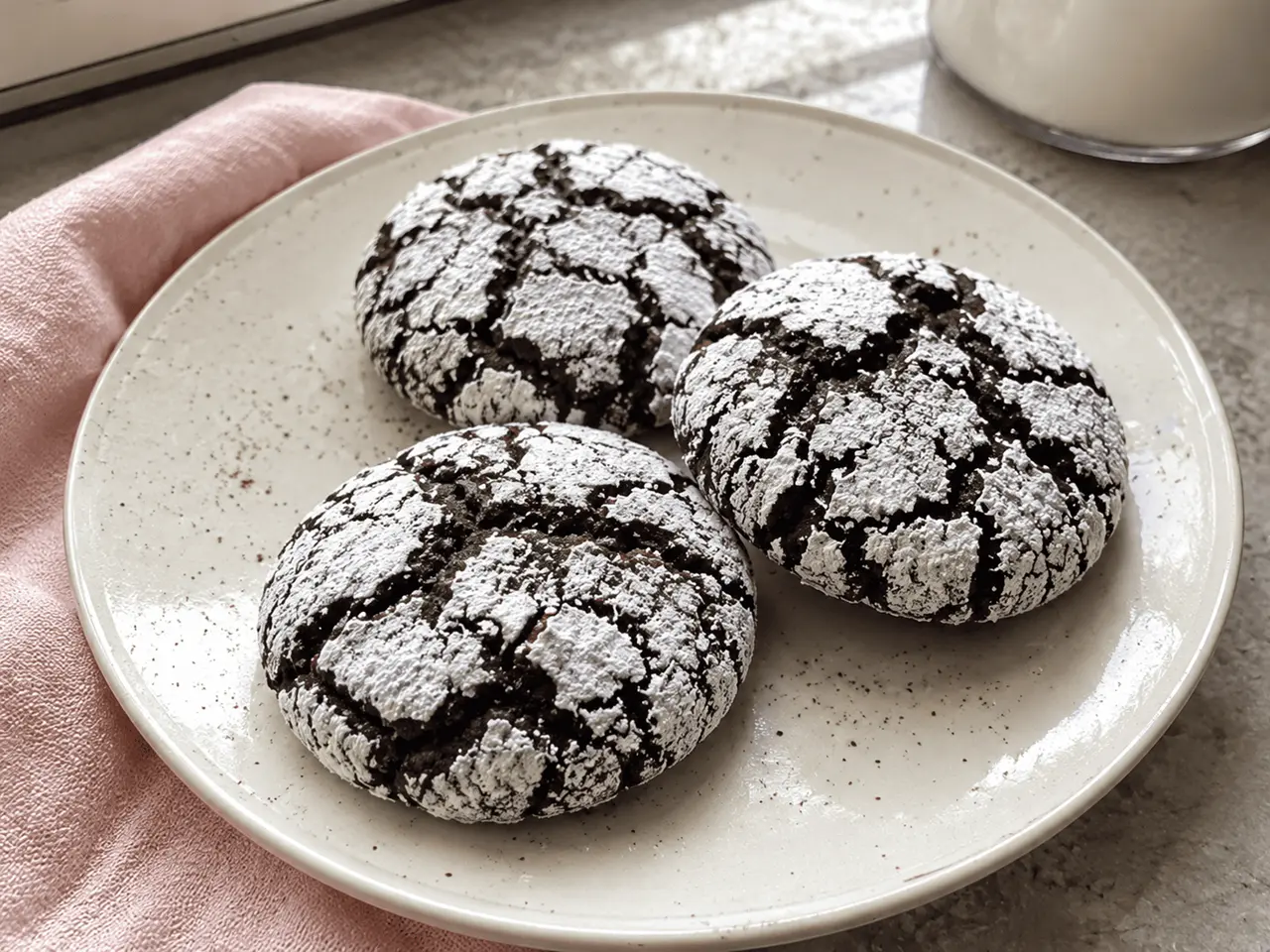
There is something about a tray of chocolate crinkle cookies cooling on the counter that makes my kitchen feel a little more welcoming. The rich chocolate aroma fills every corner of the room, and the snowy coating of powdered sugar always makes these cookies look like they came from a neighborhood bakery instead of my own oven.
I come back to this recipe every holiday season, but I honestly bake these cookies all year long. They’re simple enough for a weekend baking project and special enough to share at cookie exchanges, birthdays, or family gatherings. The outside develops those beautiful crackled lines while the center stays soft and rich with a fudgy chocolate texture.
The first few times I made chocolate crinkle cookies, I rushed the chilling step because I wanted cookies sooner. The dough spread too much, and the signature cracks never really formed. Once I started giving the dough enough time to chill and coated each dough ball generously with powdered sugar, everything changed. The cookies baked taller, the tops split beautifully, and every bite had that soft chocolate texture I was hoping for.
Now they’re one of the recipes friends ask me to bring every December—and I never mind making another batch.
Why Chocolate Crinkle Cookies Crack So Beautifully
The signature crackled top isn’t luck. It’s created by a combination of cold dough, baking powder, and a thick coating of powdered sugar. As the chilled dough heats in the oven, it expands quickly. The outside sets first, then splits open as the cookie continues to rise, revealing the dark chocolate underneath.
If your cookies spread into flat circles without many cracks, the dough was probably too warm before baking or didn’t have enough powdered sugar coating. Chilling the dough for at least 2 to 3 hours makes a noticeable difference.
Keeping Chocolate Crinkle Cookies Soft and Fudgy
These cookies should never be crunchy all the way through. The centers stay tender because the cookies are slightly underbaked. They continue cooking from the residual heat after leaving the oven.
I always pull them out when the edges are set but the centers still look just a little soft. They may seem underdone for a minute or two, but they’ll finish setting as they cool. Overbaking is the fastest way to lose their soft, fudgy center.
Chocolate Crinkle Cookies Ingredients
- 1 cup (125g) all-purpose flour — Gives the cookies enough structure while keeping the crumb soft.
- ½ cup (50g) unsweetened natural cocoa powder — This is where most of the chocolate flavor comes from. Choose a good-quality cocoa for a richer taste.
- 1 teaspoon baking powder — Helps lift the dough and creates those classic crinkles during baking.
- ¼ teaspoon salt — A small amount balances the sweetness and makes the chocolate taste deeper.
- ½ cup (113g) unsalted butter, melted and slightly cooled — Adds richness and keeps the cookies tender.
- 1 cup (200g) granulated sugar — Sweetens the dough while helping create the shiny surface beneath the powdered sugar.
- 2 large eggs, room temperature — Bind everything together and give the cookies their soft interior.
- 1 teaspoon pure vanilla extract — Adds warmth that rounds out the chocolate flavor without standing out.
- 1 teaspoon instant espresso powder (optional) — You won’t taste coffee, but it makes the chocolate flavor seem more intense.
- 1 cup (120g) powdered sugar — Roll the dough generously so the cookies bake with bright white cracks instead of patchy tops.
Smart Substitutions
- Butter → Neutral oil
Replace the melted butter with ½ cup vegetable or canola oil (1:1). The cookies stay soft, though the flavor becomes a little less rich. - Natural cocoa powder → Dutch-process cocoa
Use an equal amount. Dutch-process cocoa gives a darker color and smoother chocolate flavor. - Vanilla extract → Almond extract
Use ¼ teaspoon almond extract instead of 1 teaspoon vanilla. Almond is stronger, so a little goes a long way. - All-purpose flour → Gluten-free 1:1 baking flour
Substitute the same amount. Choose a blend that contains xanthan gum for the closest texture. - Espresso powder → Leave it out
If you don’t have espresso powder, simply skip it. The cookies will still have plenty of chocolate flavor. - Powdered sugar → Granulated sugar plus powdered sugar
For thicker, brighter cracks, roll each dough ball lightly in granulated sugar first, then coat generously with powdered sugar before baking.
How to Make Chocolate Crinkle Cookies (Step-by-Step)
Step 1: Mix the Dry Ingredients
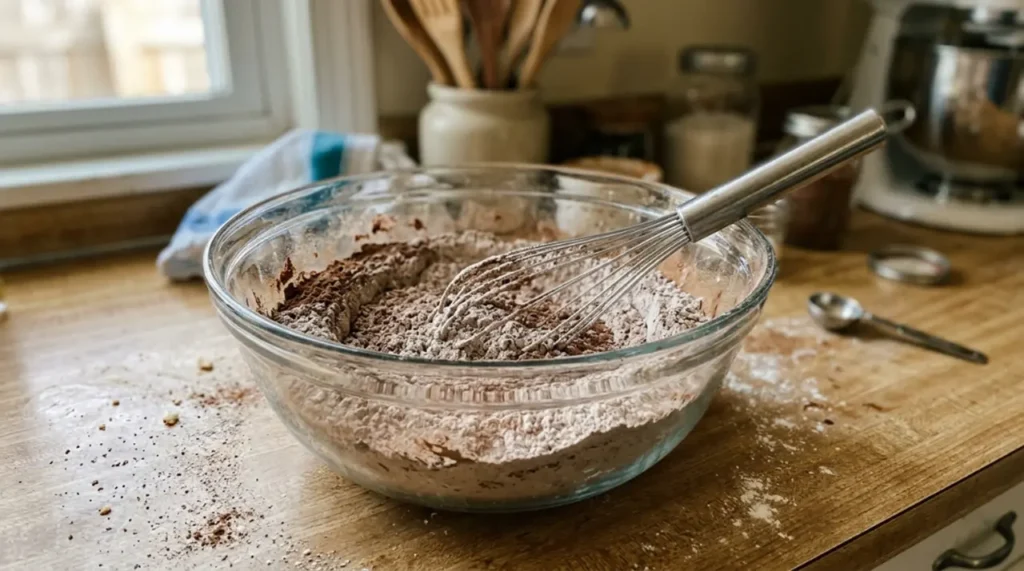
In a medium bowl, whisk together the flour, cocoa powder, baking powder, and salt until you don’t see any streaks of cocoa. Breaking up small cocoa lumps now helps the dough mix more evenly later.
Step 2: Mix the Wet Ingredients
In a large bowl, whisk the melted butter and granulated sugar until the mixture looks glossy. Add the eggs one at a time, then stir in the vanilla extract and espresso powder if you’re using it. The mixture should become smooth and slightly thick.
Step 3: Combine the Dough
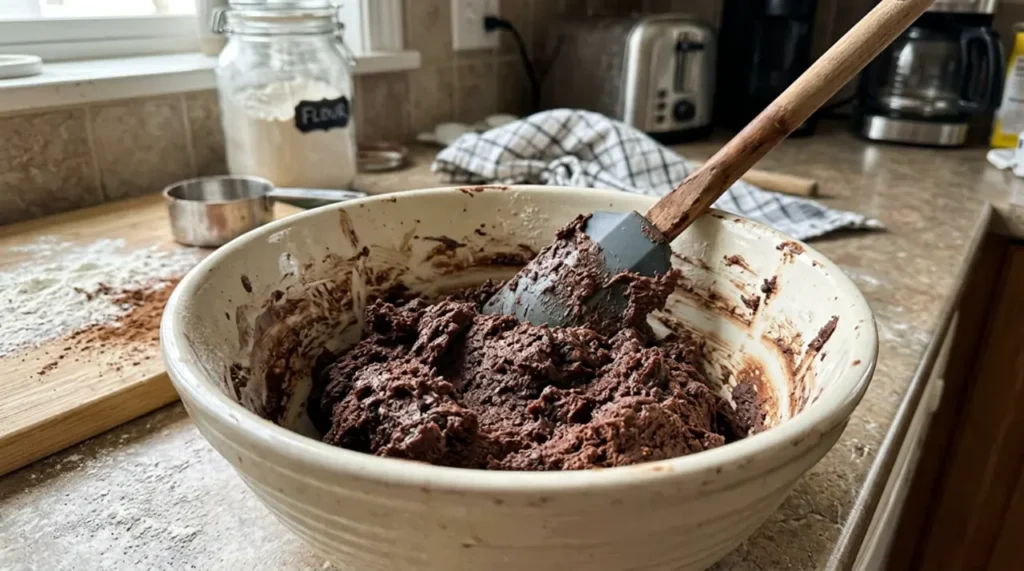
Add the dry ingredients to the wet mixture in two additions. Fold gently with a spatula until no dry flour remains. The dough will feel much softer than regular cookie dough—almost like thick brownie batter. Resist the urge to keep mixing once everything is combined, since overmixing can make the cookies less tender.
Step 4: Chill the Dough
Cover the bowl tightly and refrigerate for at least 2 to 3 hours, or overnight if your schedule allows. This is the step people most often rush, but it’s what helps the cookies stay thick and develop their signature crackled tops instead of spreading flat.
Step 5: Preheat and Prepare
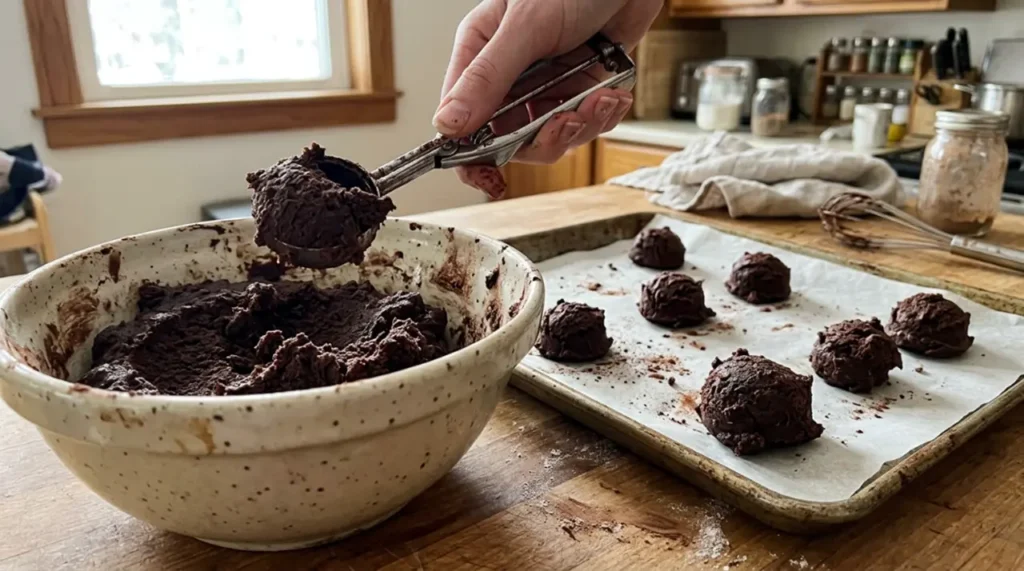
Heat your oven to 350°F (175°C). Line two baking sheets with parchment paper. Scoop the chilled dough into about 1½ tablespoon portions and quickly roll each into a ball while the dough is still cold.
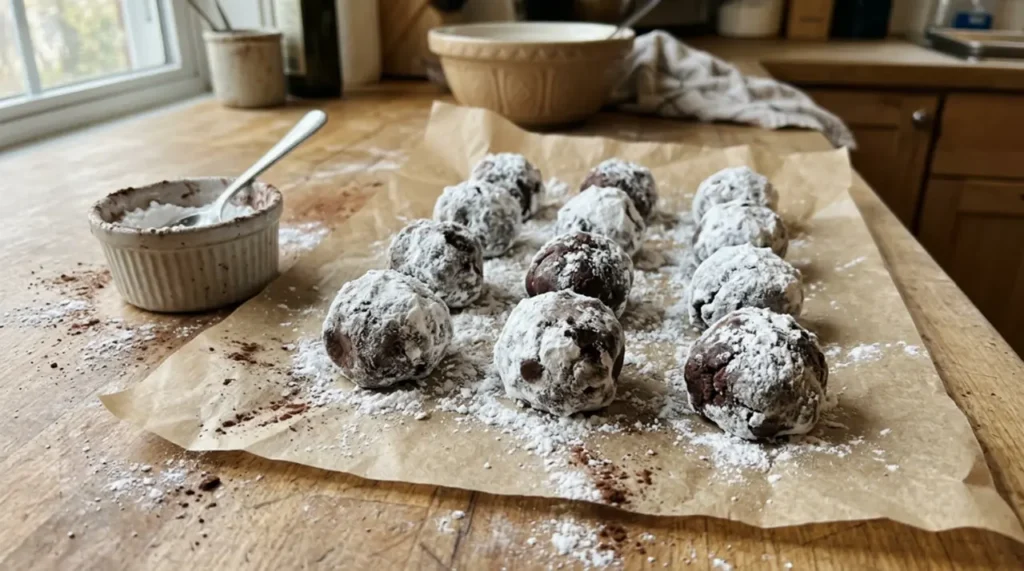
Step 6: Coat with Powdered Sugar
Roll each dough ball generously in powdered sugar until it looks completely white. For even bolder cracks, lightly roll the dough in granulated sugar first, then coat heavily with powdered sugar. Don’t brush off the excess—the thick coating creates the classic snowy finish.
Step 7: Bake
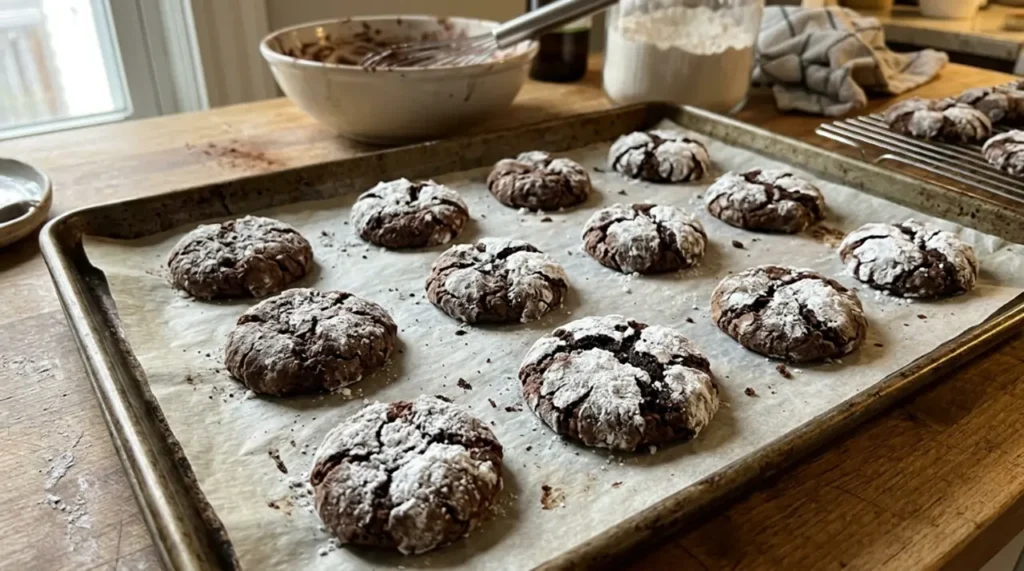
Place the cookies about 2 inches apart and bake for 10 to 12 minutes. You’ll see the cookies puff, spread slightly, and split into beautiful white cracks. The edges should look set while the centers still appear just a little soft.
Don’t walk away during the last couple of minutes. Pulling them from the oven at the right moment is what keeps the centers rich and fudgy instead of dry.
Step 8: Cool Before Serving
Let the chocolate crinkle cookies cool on the baking sheet for about 5 minutes before transferring them to a wire rack. They’ll continue to firm up as they cool while staying soft in the middle.
Once completely cool, the powdered sugar coating becomes even more striking against the dark chocolate cracks.
Serving Suggestions
Chocolate crinkle cookies are wonderful with a cold glass of milk, but there are plenty of other ways to enjoy them.
- Pair them with hot chocolate on a cold afternoon for an extra chocolate treat.
- Serve alongside fresh raspberries or strawberries to balance the rich cocoa flavor.
- Add them to a holiday cookie platter with sugar cookies, gingerbread, and shortbread.
- Sandwich a scoop of vanilla ice cream between two cookies for an easy frozen dessert.
- Enjoy one with coffee or a latte when you want an afternoon treat that’s not overly sweet.
- Dust with a little extra powdered sugar just before serving if they’ve been sitting out for a day.
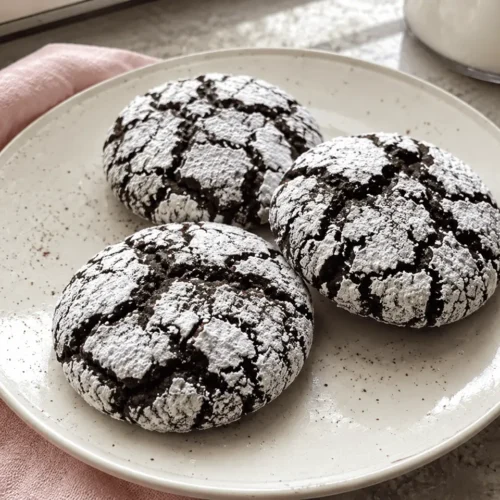
Chocolate Crinkle Cookies

Equipment
- Mixing bowls
- Whisk
- Rubber spatula
- Measuring cups and spoons
- Cookie scoop or tablespoon
- Baking sheets
- Wire cooling rack
Ingredients
- 1 cup 125g all-purpose flour
- ½ cup 50g unsweetened natural cocoa powder
- 1 teaspoon baking powder
- ¼ teaspoon salt
- ½ cup 113g unsalted butter, melted and slightly cooled
- 1 cup 200g granulated sugar
- 2 large eggs room temperature
- 1 teaspoon pure vanilla extract
- 1 teaspoon instant espresso powder optional
- 1 cup 120g powdered sugar, for rolling
Instructions
- Whisk the dry ingredients. Combine the flour, cocoa powder, baking powder, and salt in a medium bowl.
- Mix the wet ingredients. Whisk together the melted butter and sugar. Add the eggs one at a time, then stir in the vanilla and espresso powder if using.
- Make the dough. Fold the dry ingredients into the wet ingredients until a soft chocolate dough forms.
- Chill. Cover and refrigerate the dough for at least 2 to 3 hours, or overnight for the easiest handling.
- Prepare for baking. Heat the oven to 350°F (175°C) and line baking sheets with parchment paper.
- Shape and coat. Scoop the dough into 1½ tablespoon portions. Roll into balls, then coat generously with powdered sugar. For brighter cracks, roll first in a little granulated sugar and then in powdered sugar.
- Bake. Arrange the cookies about 2 inches apart and bake for 10–12 minutes, until the edges are set and the tops have crackled.
- Cool. Leave the cookies on the baking sheet for 5 minutes before moving them to a wire rack to cool completely.
Notes
- Make ahead: The dough can be refrigerated for up to 3 days before baking, making it easy to prepare in advance.
- For brighter crinkles: Roll each dough ball in a little granulated sugar before the powdered sugar coating.
- Storage: Keep baked cookies in an airtight container at room temperature for 4–5 days or freeze for up to 3 months.
- Don’t overbake: The centers should still look slightly soft when you remove the cookies from the oven. They’ll finish setting as they cool.
Storage and Reheating
These chocolate crinkle cookies keep their soft texture surprisingly well when stored correctly.
- Room Temperature: Store in an airtight container for 4 to 5 days. Place parchment paper between layers to protect the powdered sugar coating.
- Refrigerator: Store for up to 1 week in a sealed container. Let the cookies come to room temperature before serving for the best texture.
- Freezer (Baked): Freeze in a freezer-safe container for up to 3 months. Thaw at room temperature for about an hour.
- Freezer (Unbaked Dough): Roll the dough into balls and freeze without the powdered sugar. When ready to bake, thaw slightly, coat with sugar, and bake, adding 1 to 2 extra minutes if needed.
Reheating
If you’d like a freshly baked feel, warm a cookie in the microwave for 8 to 10 seconds. The center becomes soft and fudgy again without drying out.
For several cookies, place them on a baking sheet in a 300°F (150°C) oven for 3 to 4 minutes, then cool for a minute before serving.
Frequently Asked Questions
Why didn’t my chocolate crinkle cookies crack?
The dough was probably too warm before baking. If your kitchen is warm, refrigerate the shaped dough balls for another 15 to 20 minutes before coating them in powdered sugar and baking.
Can I make the dough the night before?
Yes. In fact, I often refrigerate the dough overnight. Besides making it easier to scoop and roll, the longer rest allows the flour to fully hydrate, giving the cookies a slightly thicker texture and more developed chocolate flavor the next day.
Why are my crinkle cookies dry?
Overbaking is the most common cause, but cookie size matters too. Smaller dough balls bake faster, so begin checking them around the 10-minute mark. Remove the cookies when the edges are set but the centers still look slightly underbaked.
Do I have to use espresso powder?
No. It’s completely optional — espresso doesn’t make the cookies taste like coffee, it just makes the cocoa read as more intense by contrast. If you skip it, you won’t lose any structure or texture, only a slightly less deep chocolate flavor.
Can I freeze chocolate crinkle cookie dough?
Absolutely. Shape the dough into balls and freeze them on a baking sheet. Once frozen, transfer them to a freezer bag. Roll in granulated sugar (optional) and powdered sugar just before baking for the best crackled finish.
Why does my powdered sugar disappear while baking?
Usually the dough is too warm or the sugar coating isn’t thick enough. Rolling the dough in granulated sugar before the powdered sugar helps create a barrier that keeps the white coating more visible after baking.
Can I use Dutch-process cocoa powder?
Yes. It produces a darker cookie with a smoother chocolate flavor. One thing to watch: Dutch-process cocoa is less acidic than natural cocoa, and since the crackling depends partly on that acidity reacting with baking powder, your cracks may look slightly finer rather than deep and jagged.
Final Thoughts
Chocolate crinkle cookies are one of those recipes I never get tired of baking. They’re rich without feeling heavy, simple enough for an afternoon baking session, and always disappear faster than I expect. I hope they become a favorite in your kitchen too. If you bake a batch, I’d love to hear how they turned out and what special touches you added to make them your own.
References:
