

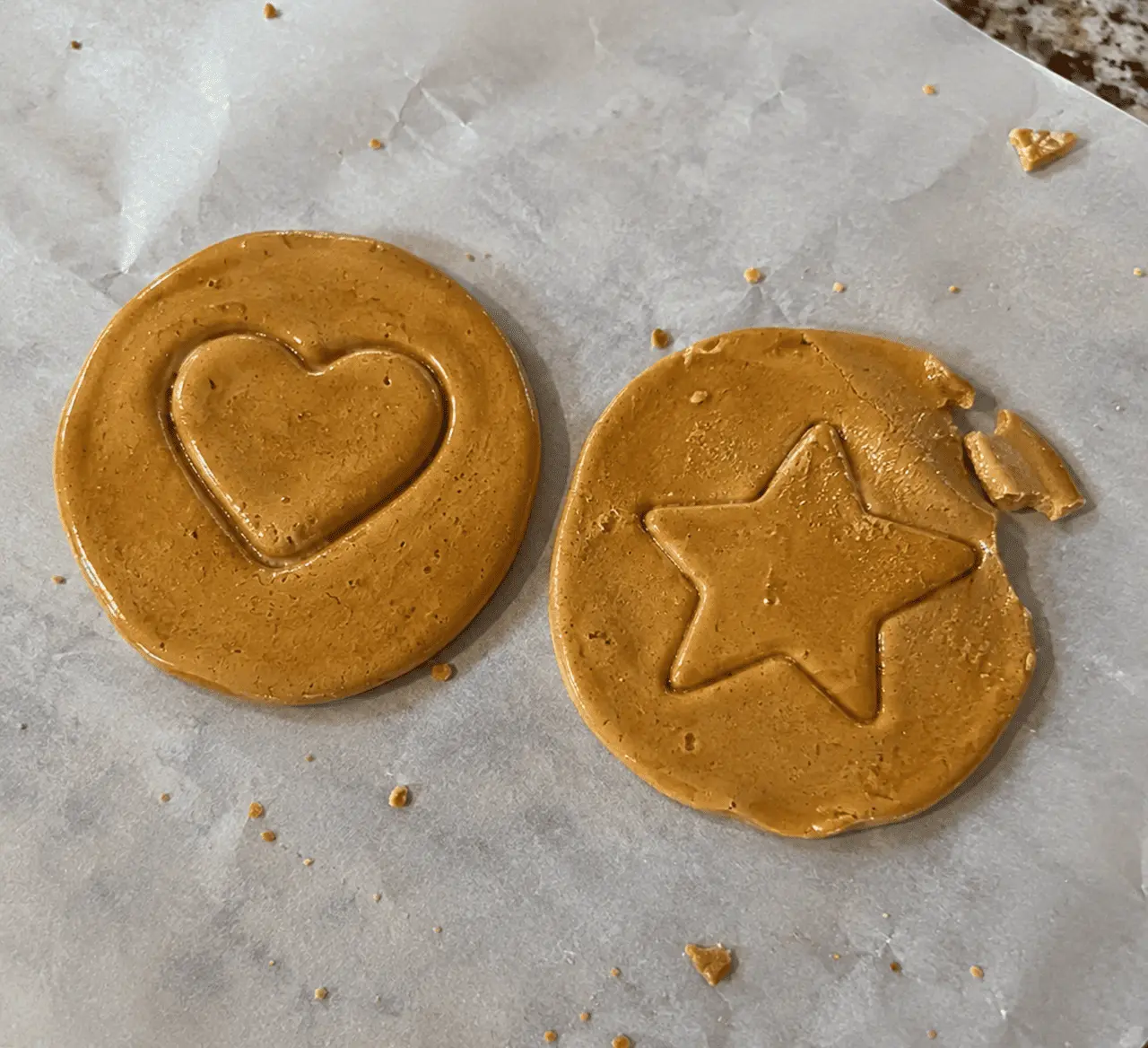
Making dalgona candy at home is simple, but the timing is surprisingly unforgiving. The recipe uses only sugar and baking soda, yet a few seconds too long over the heat can turn the candy dark and bitter.
The entire process takes less than five minutes from start to finish. All you do is melt granulated sugar until it turns into liquid amber, whip in a small pinch of baking soda, and press it flat before stamping a shape on top. When done right, you end up with a brittle, airy candy that snaps crisp between your teeth and tastes like toasted caramel.
However, sugar moves from melted gold to acrid smoke in a matter of seconds. I burned several small batches while testing different heat levels, and I found that holding the ladle slightly above a low flame gave me much more control than setting it directly over the burner. That extra distance gives the sugar time to melt without darkening too quickly.
Why Dalgona Candy Becomes Light and Airy
Making dalgona candy feels like a magic trick, but the airy texture comes from what happens when baking soda is mixed into the hot sugar. As the sugar melts and begins to caramelize, it changes from dry crystals into a smooth, amber syrup. When you stir in the baking soda, it releases carbon dioxide gas, which forms tiny bubbles throughout the thick syrup and causes the mixture to foam and expand.
The mixture quickly becomes lighter in color and more voluminous as the bubbles become trapped in the sugar. As the candy cools, the caramelized sugar hardens around those bubbles, creating the characteristic light, crisp, and brittle texture of dalgona rather than a dense piece of hard caramel.
How to Control Flame Heat Without Burning the Ladle
One of the biggest challenges when making dalgona candy is controlling the heat. Because you’re working with a small amount of sugar in a thin metal ladle, the sugar heats and darkens quickly. If you leave the ladle sitting directly over a hot flame, the bottom layer of sugar will char before the top layer even melts, leaving you with a bitter, black mess.
To control the heat, keep the ladle about 2 inches above a low gas flame instead of placing it directly on the burner. Move it farther away whenever the sugar starts darkening too quickly. If the sugar stops melting, bring the ladle slightly closer to the flame.
- Lift to cool: If you see the sugar bubbling rapidly or smoking, lift the ladle three to four inches higher off the flame while continuing to stir.
- Lower to melt: If the sugar stops melting, lower the ladle slightly closer to the heat source.
- Hovering technique: Hovering the ladle gives you more control over how quickly the sugar heats without adjusting the stove knob.
If you cook on an electric glass-top stove, heat a small skillet over medium-low heat instead of using a ladle. Lift the skillet off the burner whenever the sugar looks like it is heating up too quickly.
How to Press and Stamp Dalgona Without Sticking
Stamping your cookie cutter shape into hot candy is the trickiest step. If you press down the moment you pour the liquid candy onto your parchment paper, the sugar will glue itself to your press or measuring cup. You will end up pulling off a stringy, gooey blob instead of a smooth disc.
Pour Hot Foam ➔ Wait 10-15 Seconds (Surface Sets) ➔ Press Flat ➔ Stamp Shape
For a cleaner finish, you must respect the cooling phase. When you pour the foamed sugar onto parchment paper, it is extremely hot and fluid. Let the poured candy rest for about 10–15 seconds. The surface should become firm enough that the press doesn’t drag through the syrup, while the candy underneath is still soft enough to flatten.
Lightly oil the bottom of your flat press tool to prevent the warm candy from sticking. Press down gently with even pressure to flatten the candy. Hold the tool there for two seconds, lift it straight up, and immediately press your cookie cutter into the center. Do not cut all the way through the candy; just press hard enough to leave a clear outline.
Dalgona Candy Ingredients
- 2 tablespoons white granulated sugar: Plain refined sugar melts evenly and gives you a clear visual indicator as it turns amber. Raw or coarse sugar takes too long to dissolve uniformly in a small ladle.
- 1 tiny pinch baking soda: This creates the gas bubbles that expand the hot sugar into a light, brittle foam. Do not use baking powder; it contains added starches and acids that ruin the taste and texture.
- 1 drop neutral vegetable or canola oil (for greasing the press): A drop of neutral vegetable or canola oil rubbed onto your press tool prevents hot sugar from clinging to the metal.
Ingredient Substitutions
I recommend using regular white granulated sugar and baking soda for the most predictable results, especially on your first attempt — dalgona is a small-batch candy, so changing the sugar or leavening agent affects how quickly it melts, darkens, and foams.
If you’re watching your sodium intake, potassium bicarbonate swaps in for baking soda at an exact 1:1 ratio and releases the same amount of carbon dioxide, so the foaming and texture come out the same.
How to Make Dalgona Candy
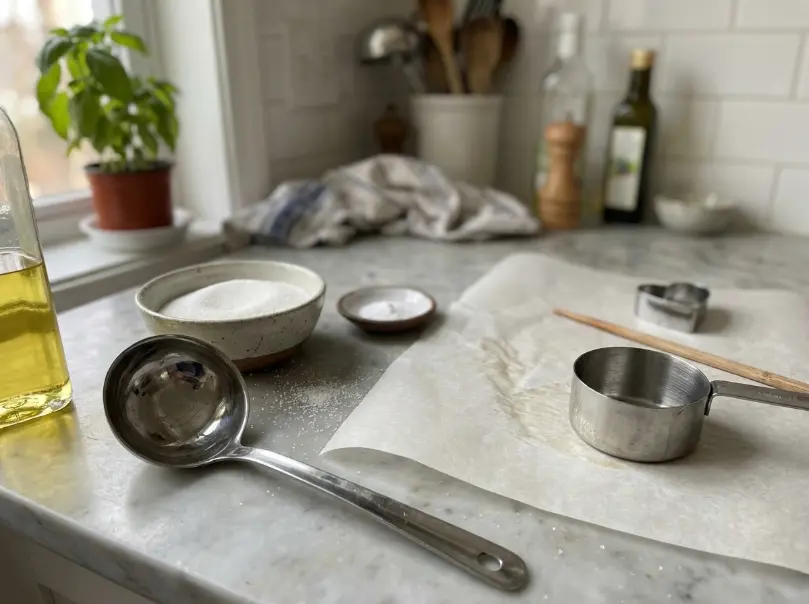
Step 1: Prep your tools and workspace
Lay a wide sheet of parchment paper flat on your kitchen counter. Lightly grease the bottom of a flat metal measuring cup, burger press, or small spatula with a drop of neutral vegetable oil. Measure out your baking soda so it is standing by, because once the sugar melts, you must work fast.
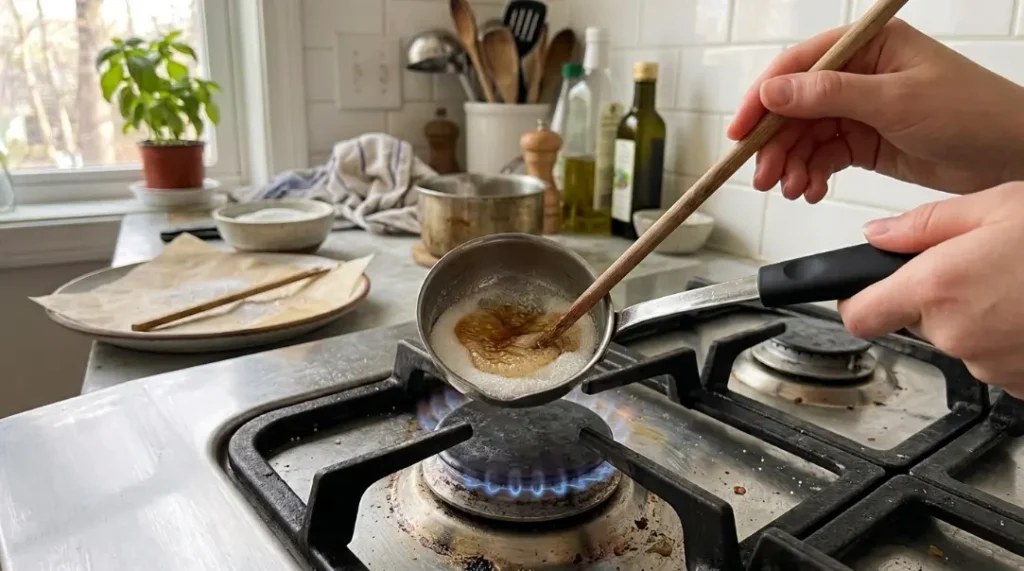
Step 2: Melt the sugar over low heat
Pour two tablespoons of white granulated sugar directly into a stainless steel ladle. Hold the ladle about two inches above a low stove flame. Stir the sugar constantly with a wooden chopstick or bamboo skewer using small, tight circular motions. As the outer edges start to liquefy, drag the clear liquid into the center to mix with the dry crystals. Keep stirring until no dry sugar crystals remain and the mixture becomes a smooth, pale amber syrup. Remove it from the heat before the syrup turns dark brown.
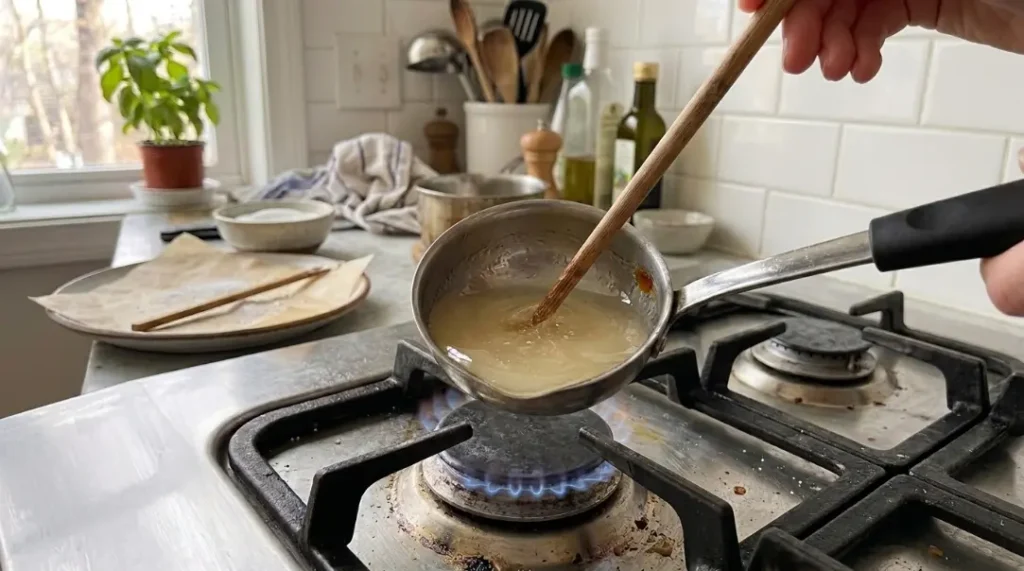
Step 3: Mix in the baking soda
Lift the ladle completely off the heat and immediately add 1 pinch baking soda. Stir rapidly with your wooden chopstick for about 5–10 seconds, until the mixture becomes lighter, frothy, and noticeably expanded. Watch closely because the residual heat can continue cooking the sugar.
Step 4: Pour onto parchment paper
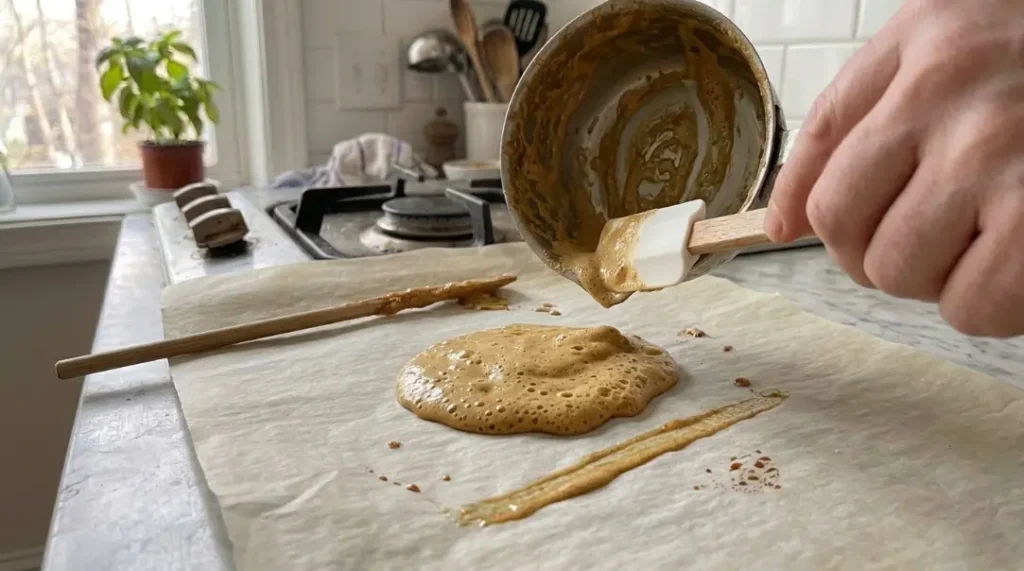
Scrape the light, puffy candy foam out of the ladle onto your prepared parchment paper using your chopstick. Let it pour naturally into a thick round puddle.
Step 5: Press, stamp, and cool
Let the candy rest for 10–15 seconds. Once the surface stops looking wet and glossy (see the visual guide above), it’s ready to press. Take your oiled measuring cup and press down gently to form a flat disc about a quarter-inch thick. Lift the press straight up. Press your cookie cutter lightly into the middle of the warm candy for two seconds to leave a crisp outline, then remove it. Allow the candy to cool completely for 2–3 minutes until hard and brittle.
How to Serve Dalgona
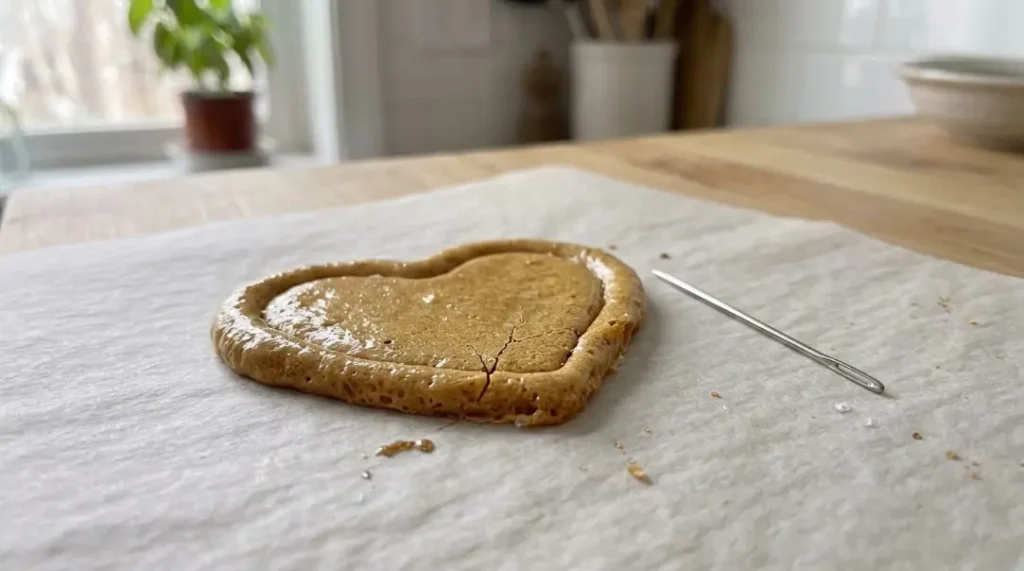
Dalgona candy is famous as an interactive game snack. For the traditional game, use a clean toothpick to carefully work around the stamped shape without breaking it. Challenge your friends to pick away the outer edges of the candy without snapping the stamped shape in the center.
If you want to use it as an ingredient, crush cold dalgona candy into bite-sized pieces with a rolling pin. Sprinkle the crunchy bits over vanilla bean ice cream, frosted cupcakes, or iced lattes. The bitter-sweet caramel notes pair naturally with cold dairy.. You can also press a wooden lollipop stick into the bottom of the warm dalgona candy disc during Step 5 to make homemade dalgona pops.
Storage
Room Temperature: Once completely cool, wrap the candy tightly and store it in an airtight container away from humidity. Dalgona candy absorbs moisture from the air and can become soft or sticky, so it is best enjoyed while the texture is crisp.
Reheating: Don’t reheat dalgona in a microwave or oven. Heat will soften or melt the candy and can destroy its crisp, airy texture. If the candy becomes soft from humidity, make a fresh batch rather than trying to restore it with heat.
What the Dalgona Candy Should Look Like
- Before baking soda: The melted sugar should be smooth, with no visible crystals, and pale amber rather than dark brown.
- After baking soda: The mixture should become noticeably lighter and foamy within seconds.
- Before pressing: The poured candy should look less glossy and should no longer flow like syrup, but it should still be soft enough to flatten.
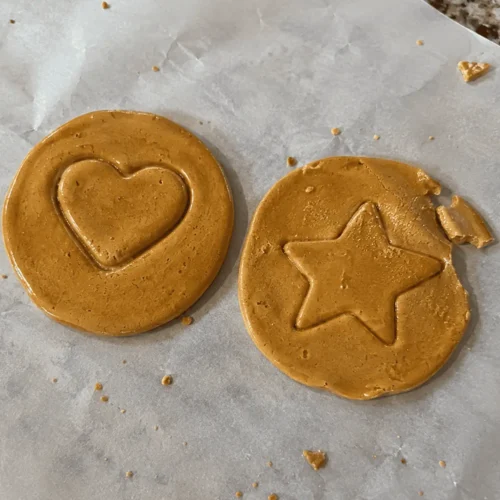
- After cooling: The finished candy should be dry, crisp, brittle, and light inside.
Dalgona Candy Recipe
Equipment
- Metal ladle or small light skillet
- Wooden chopstick or bamboo skewer
- Parchment paper
- Flat-bottom metal measuring cup
- Cookie cutter shape
Ingredients
- 2 tbsp white granulated sugar
- 1 pinch baking soda
- 1 drop neutral vegetable oil for greasing the press
Instructions
- Line your kitchen counter with a sheet of parchment paper. Lightly oil the bottom of a flat metal measuring cup.
- Add 2 tablespoons of sugar to a metal ladle. Hold the ladle 2 inches above a low burner flame.
- Stir constantly until no sugar crystals remain and the syrup becomes smooth and pale amber.
- Remove the ladle from heat. Add a pinch of baking soda and stir rapidly for 5 seconds until light, frothy foam forms.
- Scrape the hot foam onto the parchment paper in a round puddle.
- Wait 10 to 15 seconds. Press gently with your oiled measuring cup to flatten.
- Lift the press straight up, then immediately press a cookie cutter lightly into the center without cutting completely through the candy. Cool for about 2–3 minutes, until firm.
Notes
- Troubleshooting Tip: If hardened sugar sticks to the ladle, fill it with hot water and simmer until the sugar softens and dissolves.
- Storage Tip: Once completely cool, wrap the candy tightly and store it in an airtight container away from humidity.
Frequently Asked Questions
Why did my dalgona candy turn dark brown and bitter?
Your stove heat was too high or the sugar cooked too long after melting. Sugar burns quickly once it liquifies. Keep your heat on low, hold the ladle higher above the flame, and pull it off the heat the second the last sugar granule melts.
What happens if I add too much baking soda?
Too much baking soda can make the candy foam excessively and leave a noticeable alkaline or bitter taste. Because the recipe uses such a small amount, measure it carefully rather than adding a large pinch.
How do I clean burned sugar out of my ladle?
Fill the ladle or pan with hot water and let it simmer until the hardened sugar softens and dissolves. Once the sugar has dissolved, wash the tool normally.
Can I make this recipe without a gas stove burner?
Yes, you can make this on an electric or induction cooktop. Use a small, light nonstick skillet or stainless butter warmer over medium-low heat instead of a ladle, lifting the pan off the glass top whenever you need to drop the temperature.
What should melted sugar look like before I add the baking soda?
The sugar should be completely melted with no visible crystals and should look like a smooth, pale amber syrup. Don’t wait for it to become dark brown. The residual heat and baking-soda reaction will continue changing the color after you remove it from the flame.
The key to crisp dalgona candy is controlling the heat and moving quickly once the baking soda is added. Keep the sugar light in color, give the poured candy a short rest before pressing, and stamp it while the center is still slightly soft. If your first batch turns dark or bitter, lower the ladle farther from the flame on the next attempt.
