
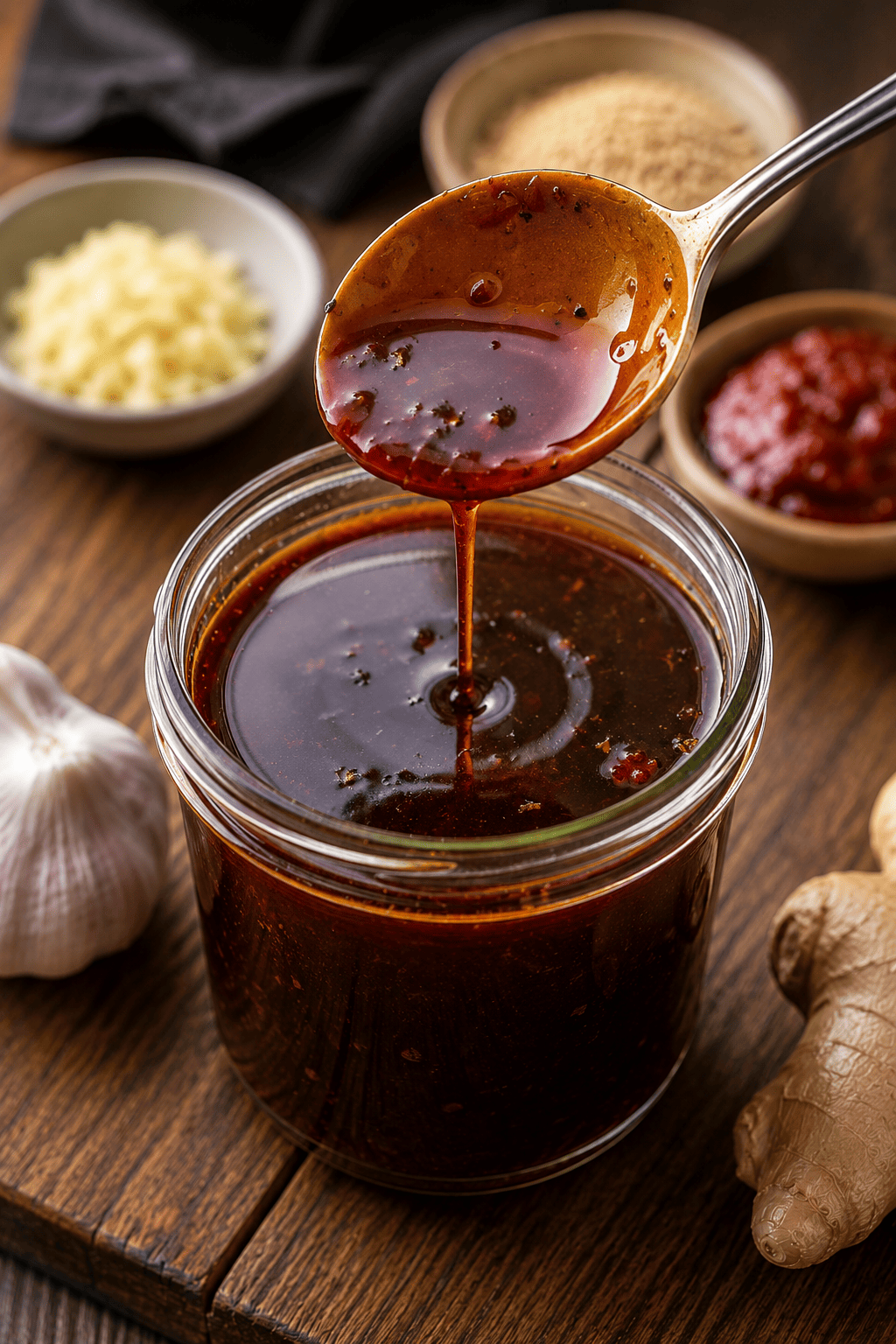
A great homemade Korean BBQ sauce creates a delicate balance between savory soy sauce, stinging raw garlic, and the subtle, creeping heat of fermented chili paste. Instead of drowning out your food, this glaze wraps around grilled chicken or roasted vegetables like a glossy, umami-rich coat. It has become my favorite kitchen shortcut for transforming plain weeknight rice bowls into something craveable.
I originally developed this fast recipe after burning three straight batches of chicken on the grill using store-bought glazes, forcing me to figure out exactly how sugars and heat interact in a marinade. Unlike traditional, heavy American BBQ sauces that rely on liquid smoke and a thick tomato paste base, this style is light, intensely peppery, and highly aromatic. While authentic, slow-simmered Korean marinades often demand grated Asian pears or onions to naturally tenderize meats, this streamlined version uses brown sugar and rice vinegar. It gives you those iconic, bold flavors in a fraction of the time.
The Secret to the Perfect Glossy Texture
What truly sets a great Korean BBQ sauce apart is how it behaves on the plate. If you simply mix the liquid ingredients together, the sauce will run straight off your meats and pool wastefully at the bottom of the dish.
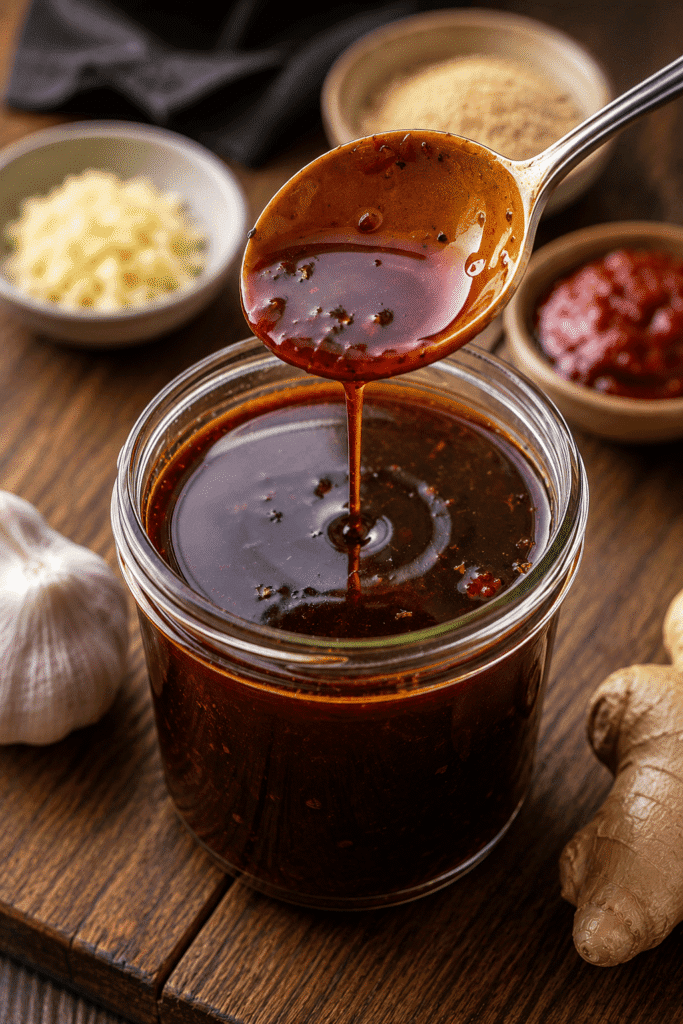
To fix this, we use a quick cornstarch slurry. By dissolving a tablespoon of cornstarch into cold water before adding it to the warm pot, you prevent clumping entirely. As the mixture heats up, the starch molecules expand and bind the liquids together. Within roughly 90 seconds of simmering, the sauce transforms from an opaque, watery brown liquid into a translucent, silky glaze that clings effortlessly to a spoon—and your food.
Ingredients You’ll Need
The Core Base:
- 1 cup soy sauce: Provides the foundational salt and deep umami. (Substitute with tamari if you are cooking for someone with a gluten sensitivity).
- 3/4 cup packed brown sugar: Creates a rich, molasses-backed caramel sweetness that balances the salt.
- 2 tablespoons minced garlic: Use fresh cloves here; garlic powder completely loses its sharp punch in this quick simmer.
- 1 teaspoon grated fresh ginger: Adds a clean, zesty warmth that cuts through the sugar.
- 1 tablespoon rice vinegar: Brings a bright, necessary acidity to wake up the heavy flavors.
- 1 tablespoon gochujang (Korean chili paste): This is essential. It delivers a deeply layered, fermented heat rather than just a sharp burn.
- 1 teaspoon toasted sesame oil: Adds a vital, nutty aroma. Always add this at the very end of cooking, as prolonged heat destroys its delicate flavor.
The Thickener:
- 1 tablespoon cornstarch
- 1 tablespoon cold water
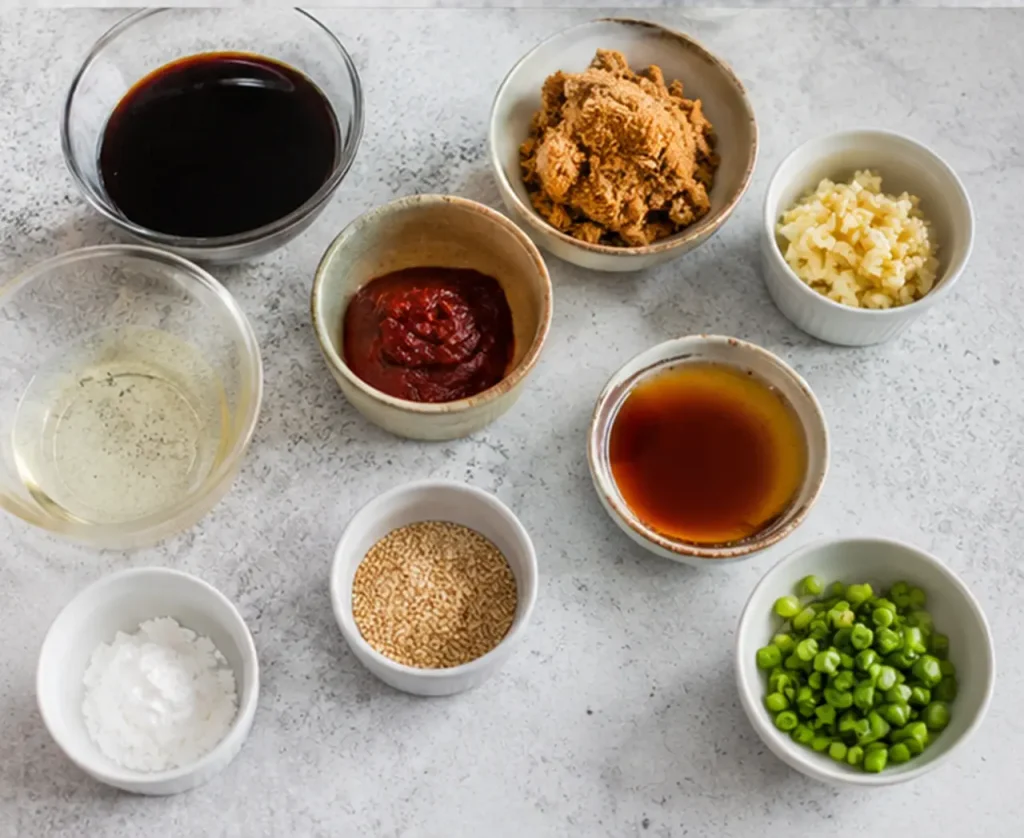
Optional Upgrades (My Personal Favorites):
- 1 tablespoon mirin: Adds a delicate, authentic culinary roundness to the sweetness.
- 1 scallion, finely chopped: Tossed in at the very end for a pop of fresh, green crunch.
- 1/2 teaspoon red pepper flakes: For when you want an extra kick of sharp heat that punches past the gochujang.
How to Cook With It Safely
This sauce is incredibly versatile, but because of its high sugar content, it requires some strategy when grilling or stir-frying:
- As a BBQ Glaze: If you are grilling chicken wings, pork chops, or beef skewers, do not brush this sauce on at the beginning of cooking. The sugars will burn into a bitter, black crust long before the meat is cooked through. Instead, cook your meat completely naked, then brush the glaze on during the final 60 seconds of cooking just to caramelize it safely.
- In a Stir-Fry: Toss your vegetables and proteins in a scorching hot wok or skillet with normal cooking oil. Pour this sauce into the pan during the final 30 seconds of cooking, tossing vigorously. The residual heat of the pan will instantly warm the glaze and coat the ingredients without scorching.
Korean BBQ Sauce Recipe

Equipment
- small saucepan
- Metal Bowl Set
- Weck Jars
Ingredients
- 1 cup soy sauce
- 3/4 cup packed brown sugar
- 2 tablespoons minced garlic
- 1 teaspoon grated fresh ginger
- 1 tablespoon rice vinegar
- 1 tablespoon gochujang
- 1 teaspoon toasted sesame oil
Thickener
- 1 tablespoon cornstarch
- 1 tablespoon cold water
Instructions
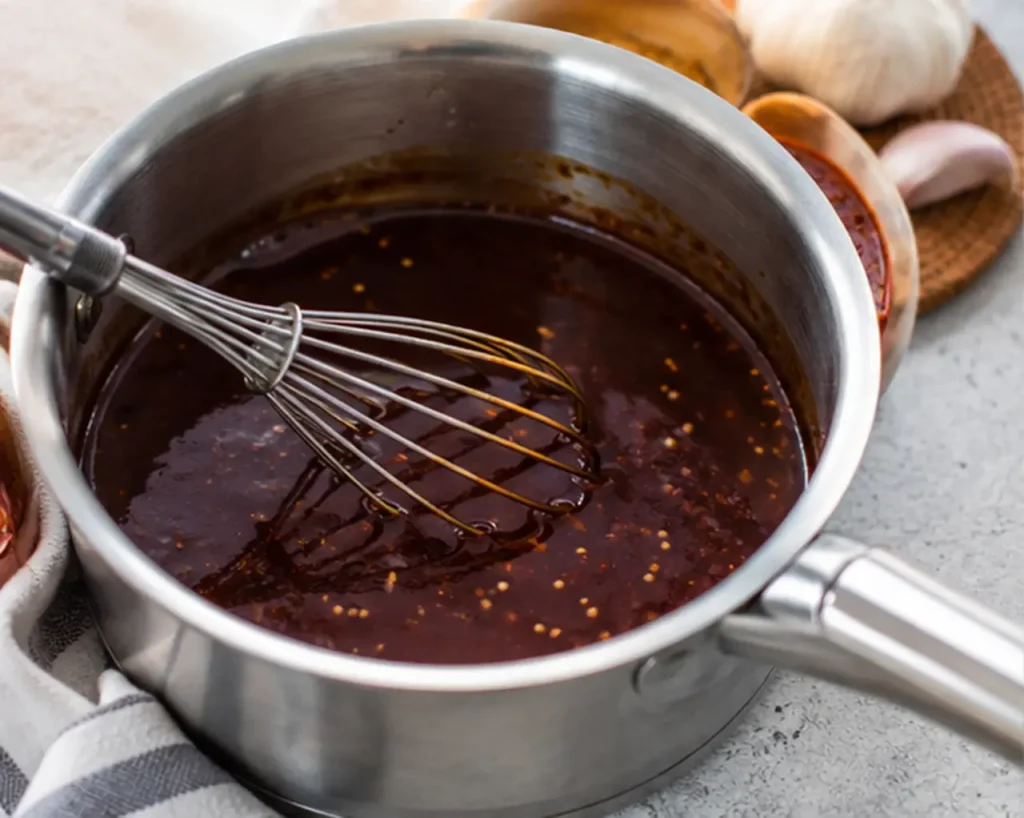
- In a small saucepan, combine the soy sauce, brown sugar, minced garlic, grated ginger, rice vinegar, gochujang, and mirin (if using). Whisk thoroughly while cold to break up the thick chili paste.
- Place the saucepan over medium heat and bring the mixture to a gentle boil, stirring occasionally to ensure the sugar fully dissolves.
- In a small cup, stir the cornstarch and cold water together until smooth. Slowly pour this slurry into the simmering sauce in a steady stream, whisking constantly.
- Reduce the heat to low. Let the sauce simmer for 2 to 3 minutes. Watch it closely: it will rapidly shift from a dull brown to a glossy, dark mahogany glaze. Once it is thick enough to coat the back of your spoon, remove it from the heat.
- Stir in the toasted sesame oil and chopped scallions (if using). Let the sauce cool for 5 minutes before using; it will continue to thicken slightly as it drops to room temperature.
Notes
Troubleshooting & Flavor Balancing
Because ingredients like gochujang and soy sauce vary wildly by brand, you should always taste and adjust your sauce after it simmers. Here is how I correct the balance in my kitchen:
- If it tastes too salty: Stir in 1 tablespoon of water and 1 teaspoon of brown sugar at a time over low heat. Avoid adding more vinegar, which will only emphasize the sharp saltiness.
- If it tastes too sweet: Whisk in an extra teaspoon of rice vinegar to cut through the sugar.
- If you burned it: If you leave the heat too high and the sugar scorches on the bottom of the pan, do not try to save it. The bitter, smoky taste will permeate the whole batch. Discard it and start over—luckily, it only takes 10 minutes!
Storage and Meal Prep Guidelines
Because this recipe relies on fresh, raw garlic and ginger rather than dried powders, I recommend storing it in an airtight glass jar in the refrigerator for no more than 7 to 10 days. This timeline keeps the fresh aromatics safely within the guidelines established by the USDA Food Safety and Inspection Service for refrigerated, home-prepared perishable foods.
⚠️ Pro-Tip: Avoid storing this in plastic containers. The intense natural pigments in gochujang, combined with the soy sauce, will permanently stain plastic a dull orange-brown.
If the sauce sits in the fridge for a few days, the cornstarch bond may tighten, causing the glaze to look gelatinous or slightly separated. Don’t worry—this is completely normal. Simply spoon your desired portion into a microwave-safe dish and warm it for 15 seconds, or gently whisk it in a small pan with a teaspoon of warm water to completely restore its silky, spoonable texture.
Frequently Asked Questions
Can this Korean barbecue sauce be frozen?
I don’t recommend freezing it after the cornstarch slurry has been cooked. When frozen and thawed, the chemical bonds in the cornstarch break down, causing the sauce to separate and turn thin and watery. If you want to freeze a batch, mix all the liquid ingredients and spices together, freeze the liquid base, thaw it, and then perform the simmering and thickening steps fresh on the stove.
What is the best substitute if I can’t find gochujang?
While nothing perfectly mirrors the deep, earthy funk of fermented Korean chili paste, you can substitute it with a mix of one tablespoon of Sriracha and a half-teaspoon of dark brown sugar. Avoid using dry cayenne pepper or standard hot sauce, as they lack the thick body and complex sweetness required for this profile.
How do I make this recipe entirely gluten-free?
Standard soy sauce contains brewed wheat, and many commercial gochujang brands use barley malt. To make this safe for celiac diets, swap the soy sauce for certified gluten-free tamari or coconut aminos, and look for a gochujang explicitly labeled gluten-free (which typically uses rice flour instead of barley).
