
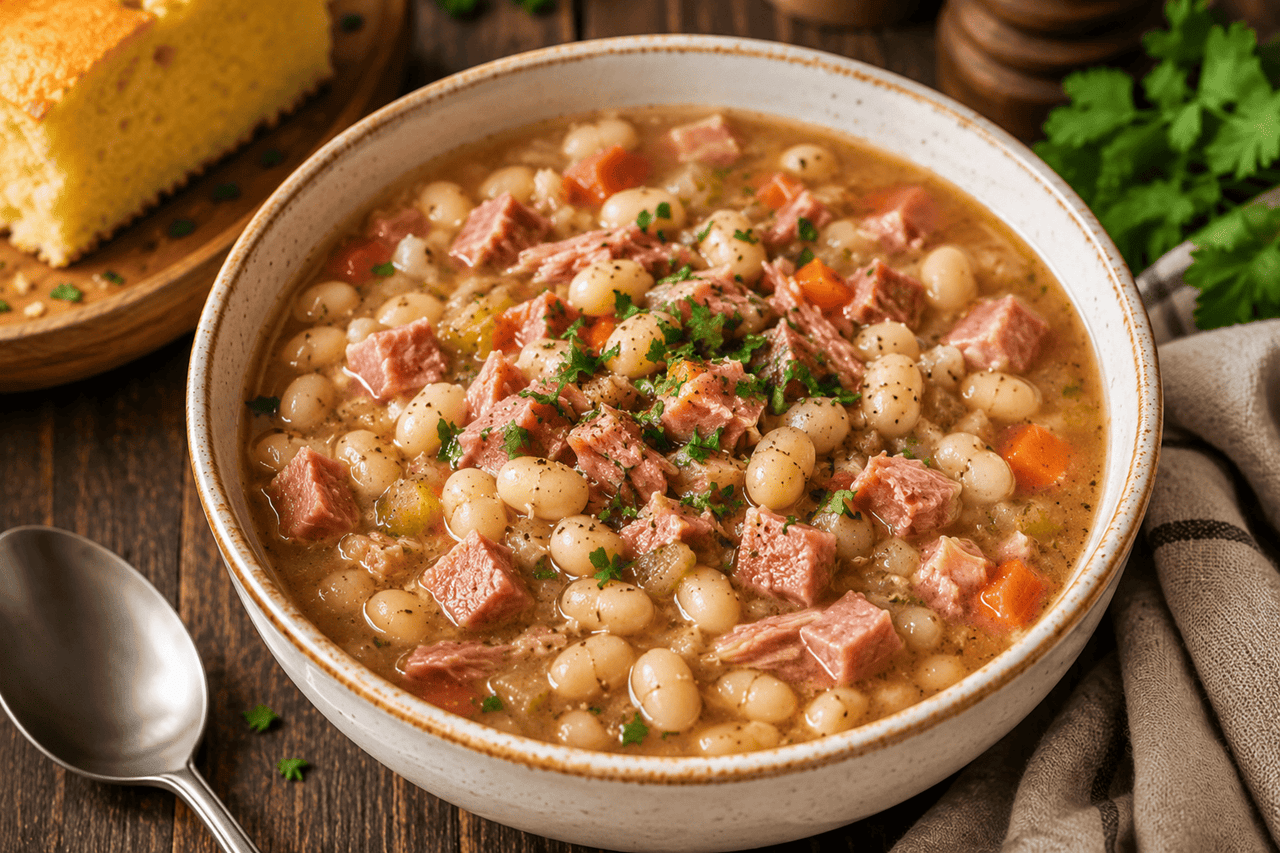
There aren’t many meals that make you feel better than ham and beans cooking on the stove. This is my favorite kind of old-fashioned recipe. It requires simple ingredients, slow cooking, and a result that tastes like home.
What makes ham and beans appealing is its practicality. It makes excellent use of leftover ham while remaining special enough to serve as a complete family meal. Some recipes include only great northern beans, ham, onion, sugar, parsley, and a pinch of cayenne, while others add carrots, celery, chicken stock, and even a Parmesan rind. That mix results in a pot that is both rustic and flavorful.
Why this Ham and Beans Recipe is the Best
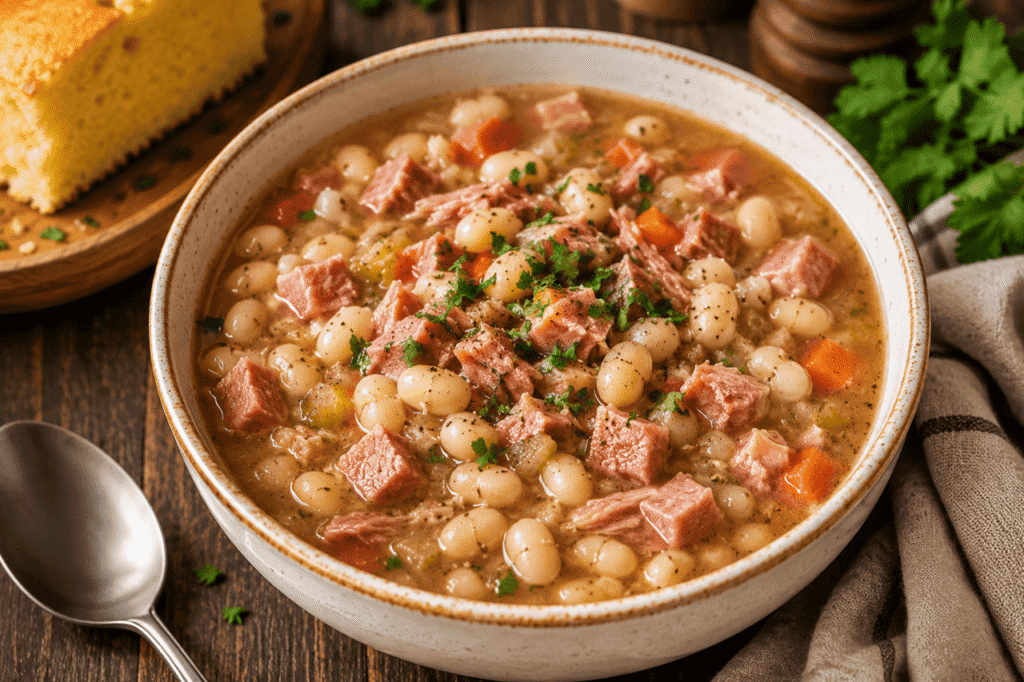
You can use the best parts of both old ways to make this recipe. The beans are soaked first so that they cook more evenly. Next, ham, spices, and broth are added, and the beans are cooked over low heat until they are soft. The brown sugar keeps it from being too salty, and the black pepper, red pepper, onion, and garlic keep it from being too bland. This makes the meal tasty and filling, with a warm and sweet touch.
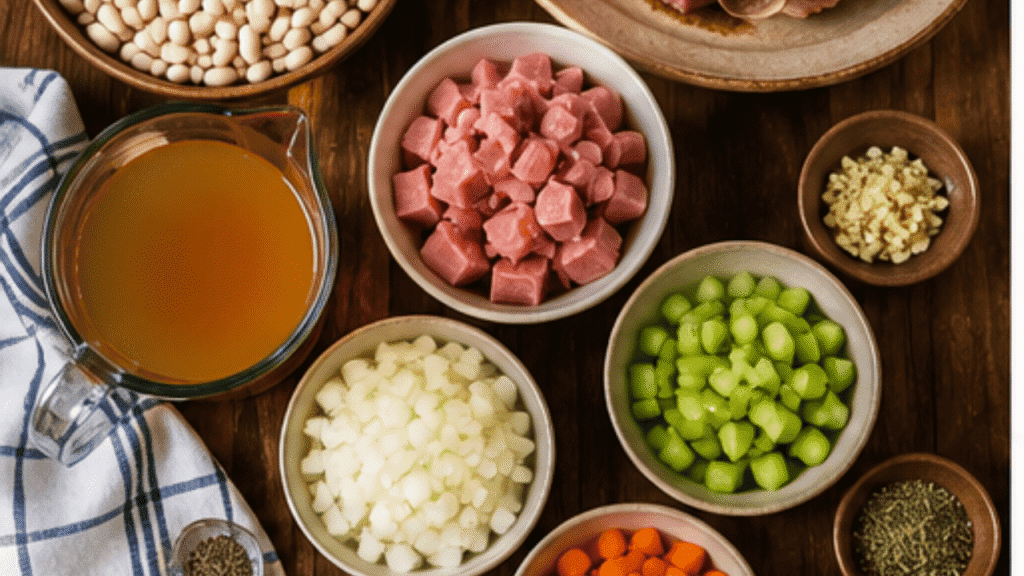
You can use more than one type of ham to make this dish. To give the dish a rich, slow-cooked taste, use a ham bone or hock. Diced cooked ham gives each serving lots of juicy bites. The fact that this food is made in layers gives it a hearty feel, even though the list of ingredients is pretty short.

Ham and Beans

Equipment
- Soup Pot
Ingredients
- 1 pound dried great northern beans or navy beans
- 2 tbsp olive oil
- ½ pound cooked ham, diced
- 1 small onion, diced
- ½ cup brown sugar
- 1 tablespoon dried parsley
- ¼ teaspoon cayenne pepper
- 6 cups water or enough water to cover
- salt and pepper to taste
Instructions
- Rinse the beans well and soak them in cold water for at least 8 hours or overnight. Drain and rinse again before cooking.
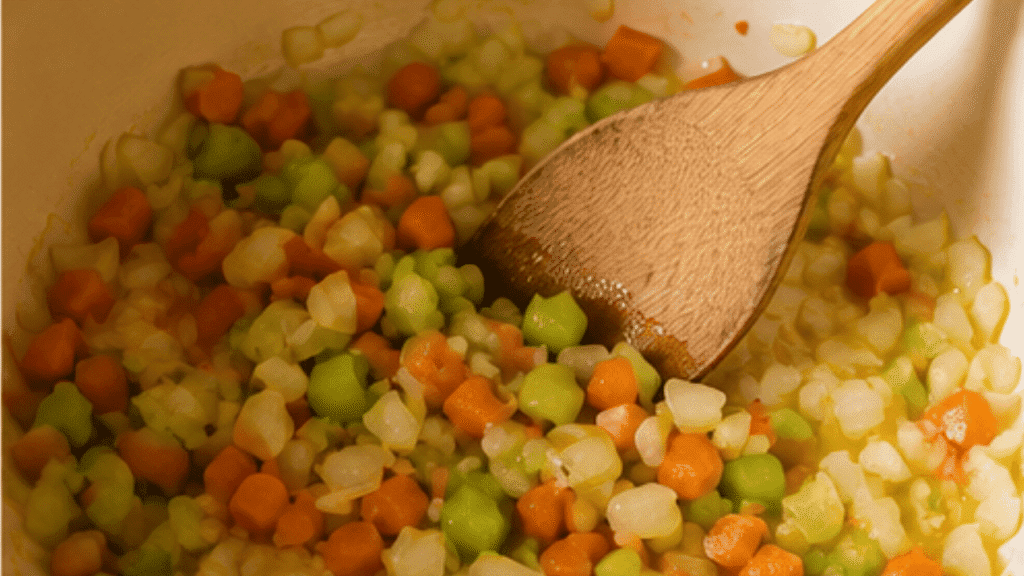
- Heat olive oil in a large stockpot or Dutch oven over medium heat. Add the onion, carrot, celery, and garlic, and cook until softened.
- Stir in the soaked beans, diced ham, ham bone, chicken stock, bay leaf, brown sugar, parsley, cayenne, black pepper, and Parmesan rind if using. Bring to a boil.
- Reduce the heat and simmer gently until the beans are tender, adding more liquid if needed, about 1 1/2 to 4 hours depending on the beans and your pot.
- Remove the ham bone and Parmesan rind. Stir any meat from the bone back into the beans, then let the pot rest for about 20 minutes to thicken. Taste and adjust the seasoning before serving.
Notes
How To Make Ham and Beans
First, thoroughly rinse the beans and soak them in plenty of cold water. Most people let them to soak overnight or for at least eight hours before draining and cleaning them. Soaking the beans helps them cook more evenly and prevents them from becoming tough.
Next, heat some olive oil in a large pot or Dutch oven. Cook the garlic, onion, carrot, and celery until the onion is tender and the kitchen smells pleasant and flavorful. This step is necessary before adding the beans because it creates a flavor foundation and prevents the dish from tasting flat.
Place the soaked beans in a pot with the ham bone or hock, sliced ham, chicken stock, bay leaf, brown sugar, parsley, cayenne, black pepper, and, if desired, the Parmesan rind. Once the pot begins to boil, reduce the heat and let the food to simmer slowly. After that, boil the beans until mushy, adding extra water as necessary. Depending on the type of bean and the quantity of heat, this could take anywhere from 2 to 2 1/2 hours, or even up to 4 hours in certain situations.
Remove the ham bone and Parmesan rind after the beans are tender. Return any meat left on the bone to the pot. After adding the beans, allow about 20 minutes for the juice to thicken and the flavors to settle. You may need to add extra salt if desired, as ham contains a lot of salt.
The secret to perfect Homestyle ham and beans
If you prefer a heartier, savorier pot, use less brown sugar. When the ham is salty, a little sweetness helps balance it out. But too much sweetness can take away from the slow-cooked taste of the dish. Being simply lets the ham and beans speak for themselves.
Don’t hold back on the ham if you have extra. This is a great way to use up holiday ham, a ham steak, or even a meaty ham bone. Adding more ham makes the pot taste better and fill you up.
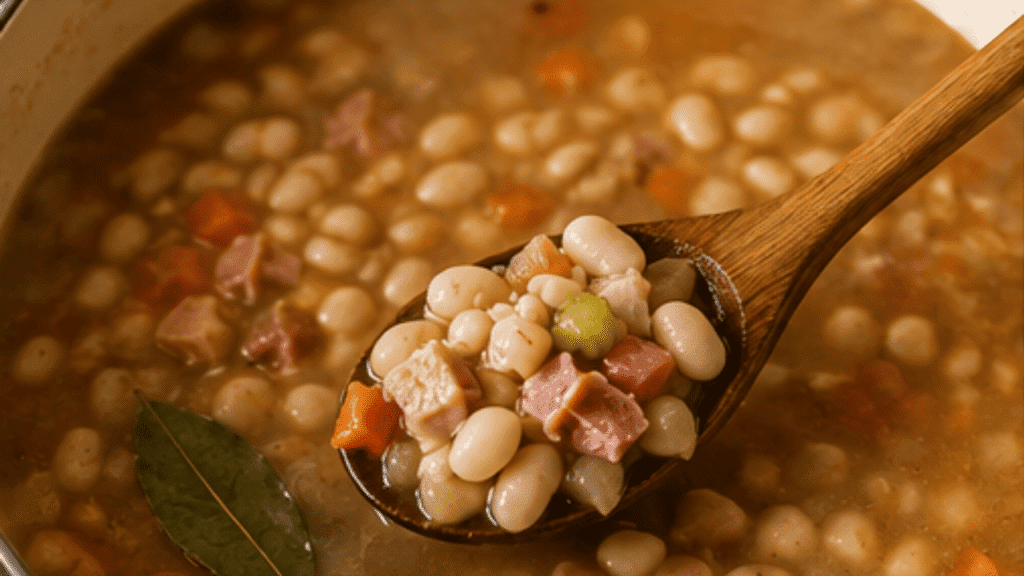
While the beans are cooking, add a little more water or stock if they look a little dry. As the beans simmer, they can soak up a lot of juice. Adding a little extra helps the broth stay smooth and silky.
The Parmesan rind is a nice extra that gives the taste more depth and layers. You don’t have to add it, but it does add a subtle spicy note that goes well with the smoky ham. It’s a simple touch that makes the whole pot taste better without making a big deal out of it.
What to serve with ham and beans
Cornbread is the ideal companion for ham and beans, and it makes perfect sense. The beans are soft and salty, and the bread is slightly sweet, making an excellent pairing. A warm slice of cornbread is ideal for scooping up the broth from the bottom of the dish. Cornbread is a natural side dish that is suggested in both reference recipes.
To round out the meal, serve with a simple green salad or a few sliced vegetables, but a bowl of ham and beans with cornbread is usually sufficient. It’s hearty, delicious, and the ideal dish to keep you warm on a cold night
Make-ahead and leftover flexibility.
This is the type of meal that often improves with time since the beans continue to absorb the smoky ham flavor. If you anticipate on having a busy night, make it earlier in the day and let it rest before reheating. That way, dinner feels almost effortless when it’s time to eat. That practicality has contributed to ham and beans’ long-standing popularity in family kitchens.
Ham and beans is a classic recipe that never goes out of style. It’s affordable, warm, and genuinely satisfying. The recipe is also quite adaptable, allowing you to make changes based on the amount of ingredients you have. Whether you keep it simple or make a deeper broth with vegetables and Parmesan rind, it’s the kind of dinner that feels genuine, domestic, and worth making again.
